
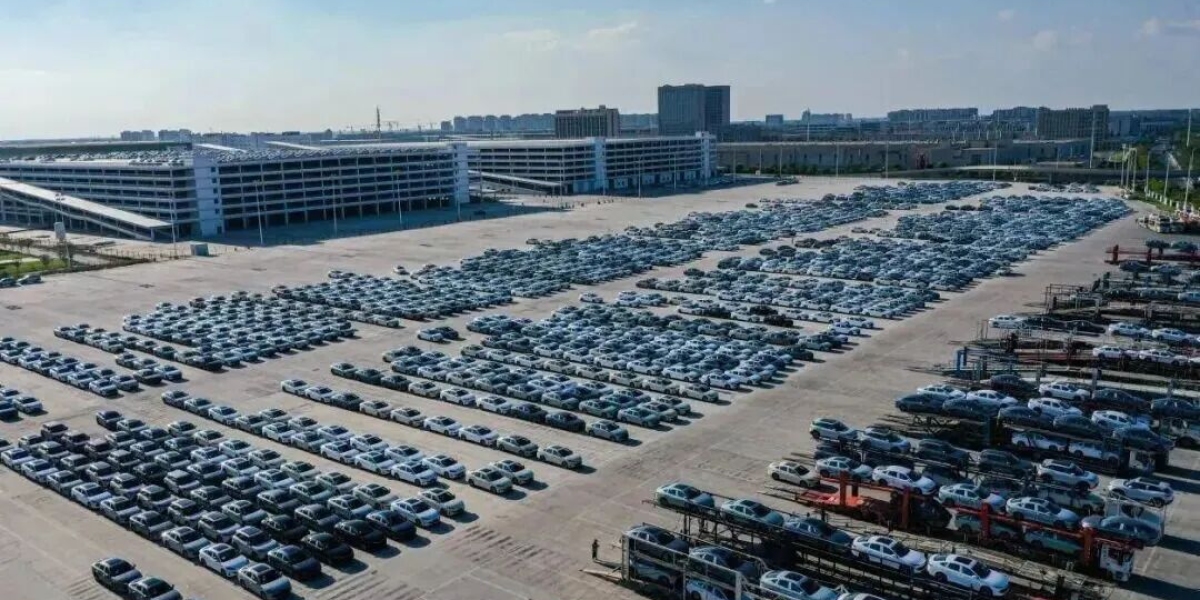
China’s car market is entering a new phase, with policymakers shifting focus from new-vehicle sales to the value created after cars leave the showroom. At a June 23 State Council press briefing, Vice-Minister of Commerce Sheng Qiuping said China’s vehicle parc had reached 370 million units, while auto sales have led the world for 17 straight years.
The latest figure marks a modest but meaningful increase from 366 million vehicles a year earlier, adding roughly 4 million vehicles to an already vast base. China also ranks first globally in new-energy vehicle production and sales, as well as in total vehicle exports.
A Market Built on Existing Cars
The scale of China’s vehicle ownership is reshaping the industry’s centre of gravity. A market once defined by showroom traffic and annual sales rankings is now giving rise to a vast automotive aftermarket, spanning repair, maintenance, modification, used-car circulation, outdoor travel and vehicle-related entertainment.
The timing matters. Official data show that more than half of China’s passenger vehicles are now over seven years old on average, placing a large share of the fleet into a period of heavier demand for servicing, parts replacement, upgrades and maintenance.
That shift is creating what policymakers describe as a trillion-yuan consumer opportunity. Rather than relying solely on new-vehicle purchases to sustain growth, China is seeking to extract more value from the vehicles already on its roads.
Beijing Turns to the Aftermarket
To support that transition, the Ministry of Commerce and other government departments have issued policy measures aimed at expanding automotive aftermarket consumption. The package covers six areas, including vehicle modification, recreational vehicles, camping, motorsport and related consumer services, with 17 specific measures outlined.
Authorities are also moving to introduce graded and category-based management for car modification, a long-sensitive area in China’s heavily regulated road-transport system. Local governments are being encouraged to improve access rules for recreational vehicles and to develop high-standard RV camping sites.
Charging infrastructure remains part of the wider plan. The Ministry of Industry and Information Technology, working with the Ministry of Finance, has launched pilot programmes to close gaps in county-level charging and battery-swapping facilities. So far, 200 pilot counties have received support.
Trade-Ins Become a Policy Engine
China’s vehicle trade-in programme has also become a key tool for supporting consumption. Over more than two years of implementation, the policy has helped more than 21 million people replace older vehicles with new ones. The average subsidy per vehicle was about $2,000.
As of June 22, China’s broader consumer-goods trade-in campaign had generated about $697.35 billion in related sales, with vehicle trade-ins accounting for 63 per cent of the total. The figures underline how central the auto sector remains to Beijing’s efforts to stabilise domestic demand.
The used-car market is also gaining momentum. From January to May this year, second-hand vehicle transactions reached 8.1 million units, up 2.3 per cent despite pressure elsewhere in the consumer economy.
Has China’s Car Market Reached Saturation?
The headline figure of 370 million vehicles raises an obvious question: has China’s auto market become saturated? The answer is more complicated than a simple yes or no.
For mass-market new-car growth, the easy years are clearly fading. A market of this size cannot keep expanding at the pace seen during China’s first great wave of motorisation. Urban congestion, parking shortages, environmental rules and a weaker household-income outlook all limit the room for unchecked volume growth.
Yet saturation in ownership does not mean stagnation in value. As China’s fleet ages, the business opportunity is shifting from first-time purchases to replacement demand, higher-quality servicing, used-car circulation, parts, insurance, charging, software, accessories and lifestyle spending around cars.
For automakers, dealers and service providers, the challenge is changing. Selling more vehicles is no longer the only measure of success. The next stage of China’s auto industry will depend on who can manage, service, upgrade and monetise the country’s enormous installed base.
The Next Contest
China’s 370 million vehicles are more than a sign of industrial scale. They mark the arrival of a more mature auto economy, one in which growth is increasingly tied to the long life of the vehicle rather than the moment it leaves the showroom.
That does not end the race for new-car sales. It changes the terms of competition. In the world’s largest auto market, the next contest will be fought not only over what consumers buy next, but over how much value companies can create from the cars they already own.