
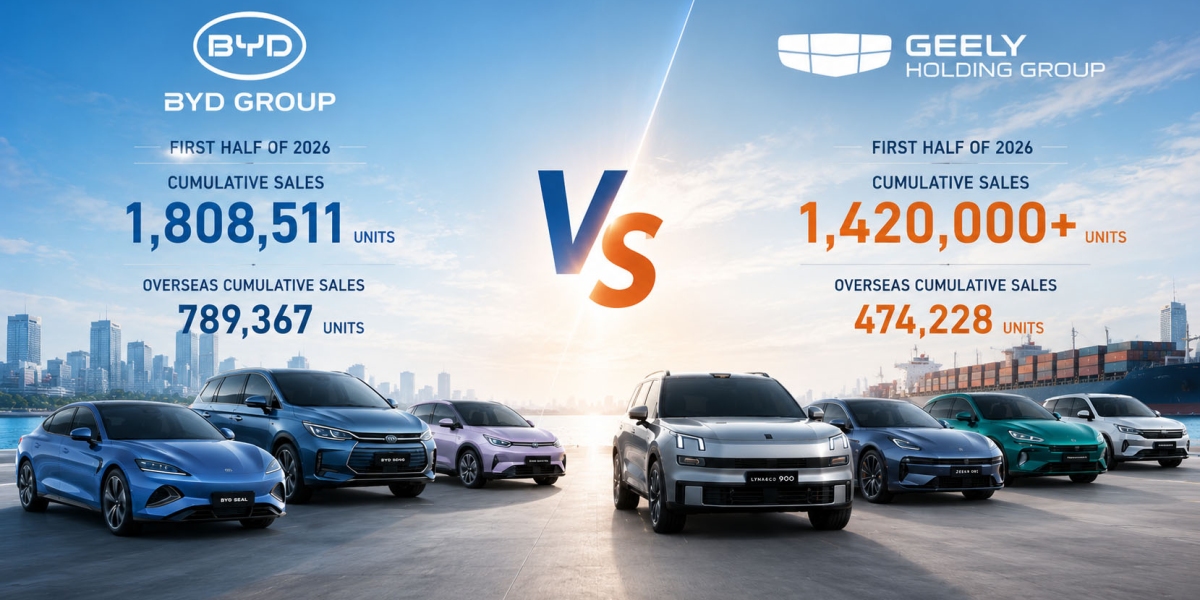
China's increasingly global automotive industry is becoming defined by a rivalry between two companies rather than dozens.
As first-half 2026 sales figures emerge, Geely Holding and BYD have further separated themselves from the rest of the market, extending a contest that now spans domestic demand, electric vehicles, exports and international expansion.
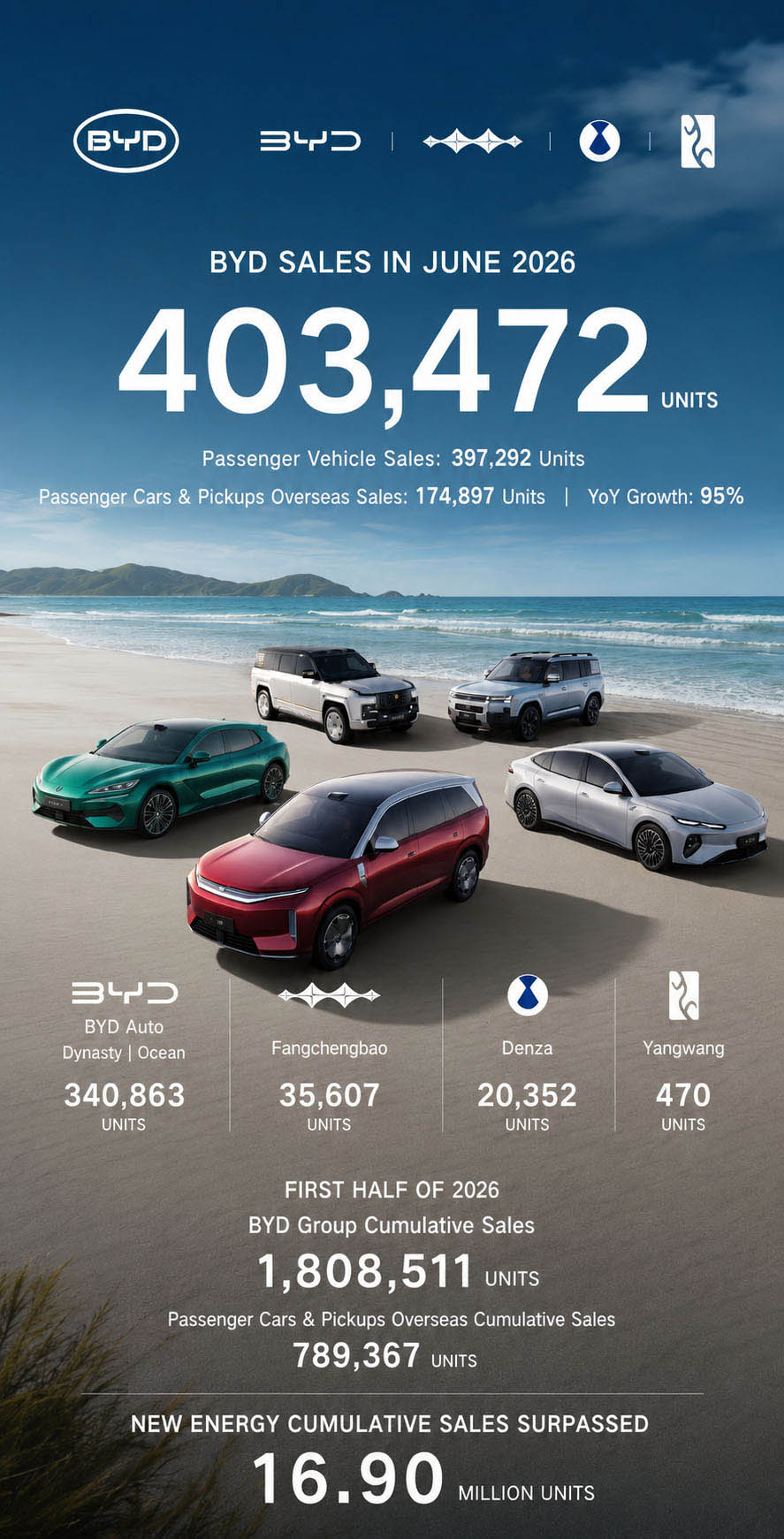
BYD remained the industry's volume leader, delivering 403,472 vehicles in June and reaching 1,808,511 sales during the first six months of 2026. Overseas deliveries exceeded 170,000 units in June alone, reinforcing the company's position as China's largest exporter of new-energy passenger vehicles.
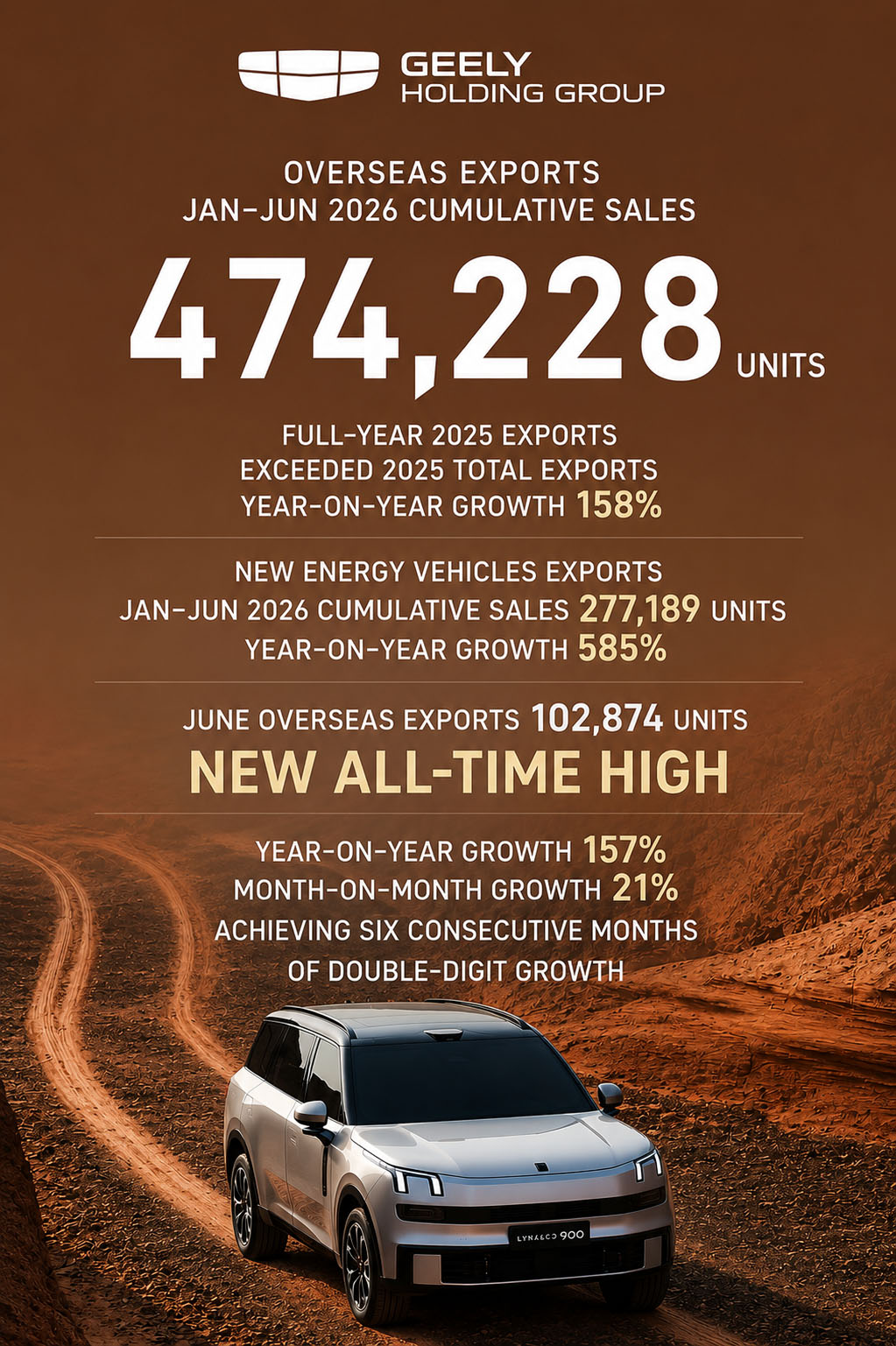
Geely, while operating from a smaller base, reported its strongest first-half performance on record. The automaker sold more than 1.42 million vehicles during the January-June period, supported by continued momentum across its Geely, Galaxy, Zeekr and Lynk & Co brands. The result highlights how quickly Geely has narrowed the gap with the market leader while maintaining strong growth across multiple price segments.
The Export Race Is Becoming the Next Battleground
If China's domestic market remains fiercely competitive, overseas expansion is becoming an equally important measure of success.
Geely said its overseas business accelerated sharply during the first half of the year, with new-energy vehicle exports surging 585% from a year earlier. Overseas deliveries exceeded 100,000 units in June, marking a new monthly record for the group.
Those figures suggest Geely's global strategy is beginning to gain scale after years of investment in international manufacturing, distribution networks and local partnerships. The company has been expanding its presence across Europe, Southeast Asia, Latin America and the Middle East, while leveraging brands such as Zeekr and Lynk & Co to target premium EV buyers outside China.
BYD, for its part, continues to move at an extraordinary pace internationally. The company's overseas deliveries have risen from a niche business just a few years ago into one capable of shipping well over 170,000 vehicles in a single month. New factories under construction in markets including Europe are expected to reduce tariff exposure and shorten delivery times for local customers.
Domestic Competition Remains Intense
The rivalry extends well beyond export volumes. Both companies have aggressively expanded their product portfolios across battery-electric and plug-in hybrid vehicles while introducing increasingly advanced driver-assistance systems and intelligent cockpit technologies.
Geely has strengthened its position through rapid growth of the Galaxy lineup, continued premium expansion at Zeekr and the integration of technology across its broader brand portfolio. BYD continues to benefit from its vertically integrated business model, covering batteries, semiconductors and vehicle manufacturing, allowing it to respond quickly to shifts in pricing and demand.
The result is an increasingly concentrated competitive landscape. While China's automotive market still includes dozens of manufacturers, the battle for industry leadership is increasingly defined by these two groups as weaker competitors struggle to keep pace with investment requirements and relentless price pressure.
China's Auto Industry Is Entering a New Phase
The first half of 2026 illustrates how the competitive landscape is evolving. Success is no longer measured solely by domestic market share. Export capability, international production, software development, battery technology and brand recognition abroad have become equally important indicators.
For global automakers, the implications are becoming harder to ignore. Chinese manufacturers are no longer competing primarily on price. They are scaling production, expanding internationally and challenging established brands across multiple markets with increasingly sophisticated products.
The second half of 2026 is likely to intensify the contest. BYD retains a clear lead in overall volume, while Geely is demonstrating that it can sustain rapid growth at home and abroad. As both companies continue expanding their global footprint, their rivalry is evolving from a domestic sales race into one of the defining competitive stories shaping the future of the global automotive industry.