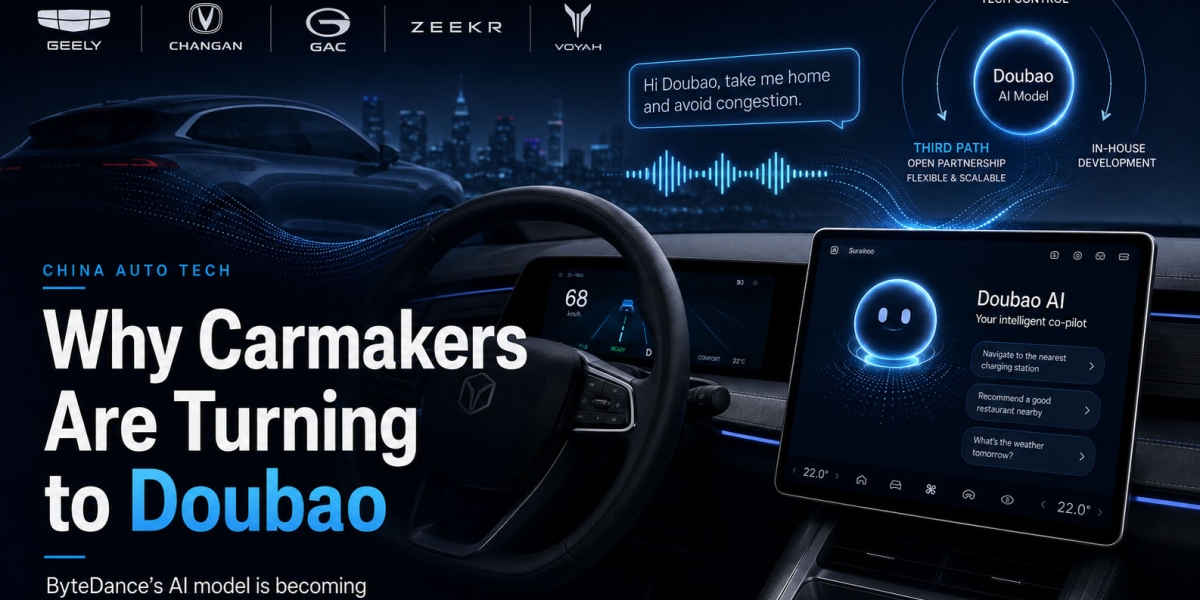
By 2026, more than 7 million vehicles worldwide are expected to be equipped with ByteDance’s Doubao large language model, marking a rapid expansion of AI integration across the automotive sector. The development is reshaping how automakers and technology firms divide responsibilities inside the vehicle stack, raising a broader question: is a new industrial structure beginning to take shape?
Cooperation between automakers and tech companies is no longer unusual. What is changing is the emergence of a “third option” beyond the dominant integration models that have defined the industry over the past decade. The recent launch of the AIVA brand by SaiDou Technology, which comes with Doubao-powered intelligent cockpit systems provided by Volcano Engine, has triggered wide industry discussion. ByteDance, however, has moved quickly to clarify its position, stressing that it has no intention of building cars and holds no equity relationship in the project, acting strictly as a technology provider.
This positioning is not accidental. ByteDance appears intent on avoiding the path taken by some competitors that have moved deeply into vehicle architecture and system control. Instead, it is reinforcing a narrower role focused on software and AI interaction layers, particularly in the cockpit domain.
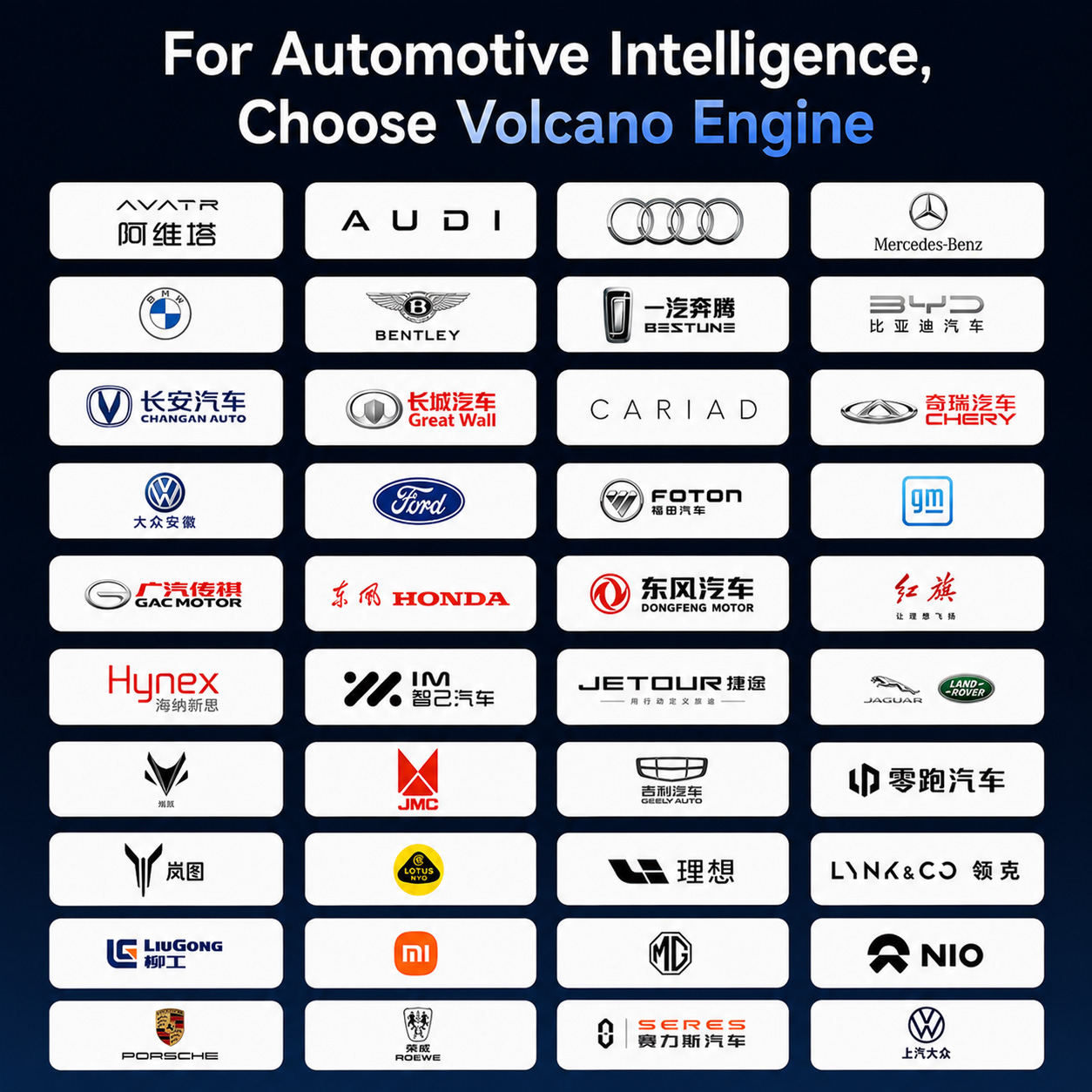
According to industry data, Doubao has already been deployed across a growing number of platforms. Roewe models were among the earliest adopters, followed by collaborations involving Mercedes-Benz, Tesla China’s voice assistant systems, and multiple domestic brands. The cumulative scale suggests that Doubao is no longer experimental but increasingly embedded in mainstream automotive products.
01. Doubao as a “Third Path” for Automakers
Before the rise of large language models in vehicles, automakers generally had two strategic options for smart cabin development.
The first was full-stack integration with technology partners. Companies such as Huawei provide end-to-end systems covering chips, operating systems, smart cockpit solutions, and even autonomous driving platforms. Automakers contribute manufacturing capacity, distribution networks, and brand positioning. This model has delivered fast commercial results, with several joint ventures achieving strong market traction. However, it also shifts product definition authority, user data control, and part of the brand value toward the technology provider.
The second path is in-house development. BYD is often cited as a leading example, investing heavily across batteries, chips, and intelligent driving systems. In 2025 alone, its R&D spending exceeded 60 billion RMB across multiple domains. However, building a full smart cockpit stack requires sustained investment at a scale that most automakers cannot easily support.

Between these two models lies a structural gap: one risks dilution of control, the other demands extraordinary capital intensity. Doubao has emerged as a third option by focusing exclusively on in-car interaction systems. It avoids involvement in vehicle manufacturing or driving systems and concentrates on the cockpit experience layer, allowing automakers to retain control while accessing advanced AI capabilities.
As of April 2026, more than 7 million vehicles across over 50 brands and 145 models have adopted Doubao-based systems, spanning premium and mass-market segments.
02. Why ByteDance Has Gained Automakers’ Trust
ByteDance’s strategy is built on clarity of scope. From the outset, the company has emphasized that it is a technology supplier rather than a vehicle manufacturer. It does not enter hardware production, chassis engineering, or autonomous driving development.
This boundary-setting has helped reduce concerns among automakers. In many traditional partnerships, deeper technology integration often leads to a gradual loss of control over user data and product definition. By restricting its focus to the cockpit layer, ByteDance leaves manufacturing, supply chain management, and vehicle engineering fully to automakers.
The results are already visible. Roewe’s M7 DMH, which integrated Doubao’s reasoning model, saw a sharp increase in voice assistant usage after an OTA update, rising from around 60% to nearly 90% daily engagement.
Roewe’s engineering leadership describes the collaboration as “joint definition and joint development,” involving shared training data and scenario optimization rather than simple API integration. The system is embedded into a broader electronic and electrical architecture featuring over 2,000 SOA service interfaces, enabling the AI model to operate across multiple vehicle functions.
This approach positions Doubao not as a peripheral feature, but as part of the underlying architecture that supports next-generation smart vehicles.
03. AI Cockpits and the Battle for Definition Power
The automotive industry is entering a phase where AI-driven cockpits are becoming a core purchasing factor. What was once considered a secondary feature is now increasingly central to consumer decision-making.
However, this transition is also forcing a structural reallocation of responsibilities. Traditional automakers were once vertically integrated, controlling everything from engine design to chassis tuning. Software-driven intelligence has shifted competitive advantage toward capabilities such as natural language understanding, data processing, and cloud-based AI systems.
These capabilities require large-scale data infrastructure and specialized talent pools that most automakers do not possess. As a result, the industry is gradually dividing roles: automakers retain hardware engineering and manufacturing, while technology companies handle AI interaction systems, cloud computing, and digital ecosystems.
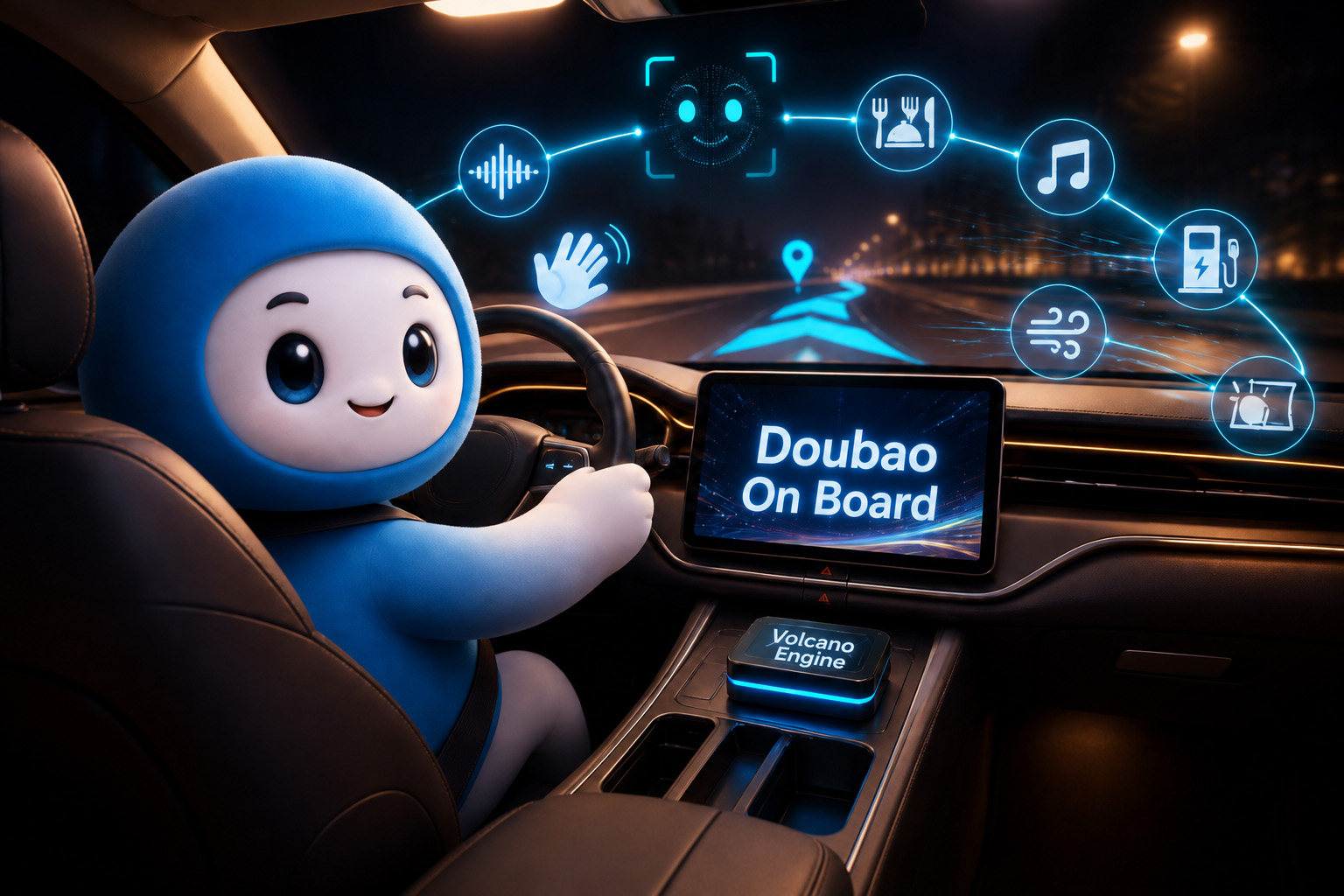
The key question is where “definition power” ultimately resides. Full-stack integration models, such as those used in tightly coupled ecosystems, tend to concentrate control within the technology provider. By contrast, Doubao’s modular approach preserves more autonomy for automakers, as it intervenes only at the interaction layer.
ByteDance is also leveraging its broader ecosystem. Its automotive strategy connects multiple platforms: a vehicle-focused media service, cloud-based AI infrastructure, content distribution channels, and the Doubao model itself. This creates a connected ecosystem that extends beyond voice assistants into content and service integration.
At the same time, concerns remain. As millions of vehicles generate interaction data processed through ByteDance’s systems, questions arise over data ownership and long-term strategic dependency. If partnership dynamics change, automakers may find it difficult to decouple from deeply embedded AI systems.
04. Conclusion
The automotive industry is moving into a phase where no single company can independently control the entire technology stack from hardware to AI software. Specialization has become inevitable.
Doubao’s rise reflects this shift. Its “single-layer integration” strategy provides automakers with a relatively low-risk way to upgrade intelligence capabilities while maintaining control over core vehicle systems.
In the short term, this model appears balanced: automakers retain definition power, while AI capabilities improve rapidly. In the longer term, however, the increasing reliance on third-party intelligence systems may gradually reshape where that control ultimately resides.
The industry is now left with a fundamental question: as AI becomes more deeply embedded in the cockpit experience, will the balance of power remain stable, or begin to shift once again?