
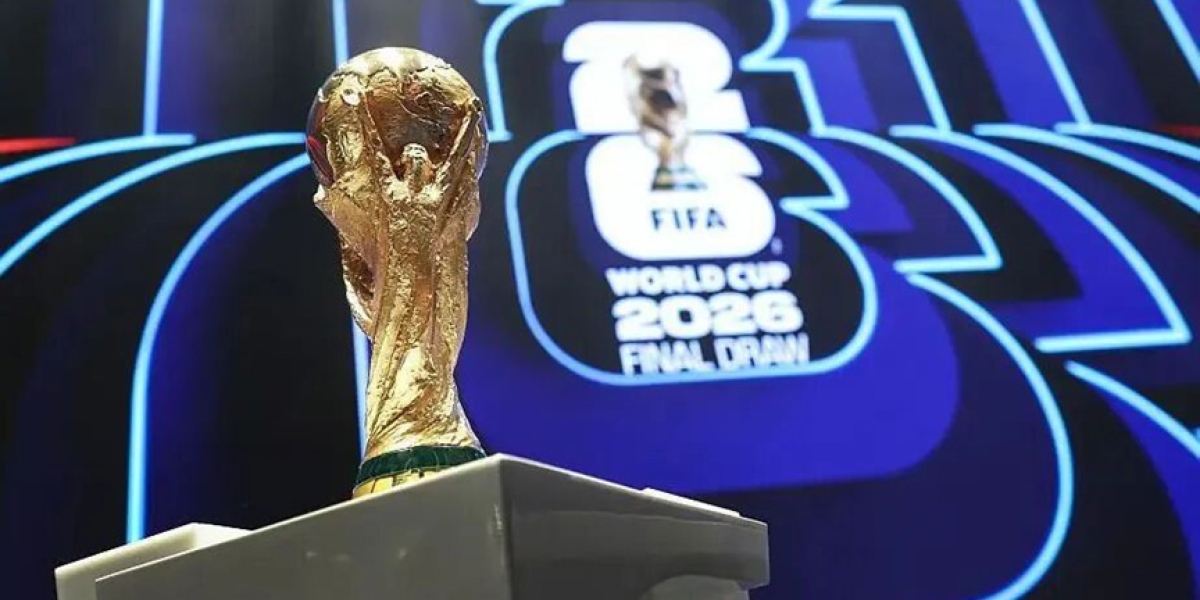
Chinese football may still be absent from the World Cup, but China’s carmakers have found another route onto the tournament’s global stage.
From BYD’s government-fleet deal in Cape Verde to Changan’s sponsorship of Cristiano Ronaldo’s Portugal, Chinese brands are using football as a shortcut into new markets, new communities and new consumer memories. The more important question is no longer whether they can enter the conversation, but whether the money being spent can turn visibility into trust.
Hyundai and Kia have held FIFA’s official automotive partnership since 1999, with the current agreement running through 2030. That has left little room for rivals seeking the most obvious sponsorship slot. Chinese automakers have responded by building side doors of their own.
Changan went to Lisbon and signed Portugal’s national team. GAC moved into Mexico City through a partnership with century-old club Toluca FC. Chery revived EBRO, a Spanish marque with local heritage, and used it to stand beside the Spanish national team. BYD and Geely avoided team sponsorships, but used Chinese broadcast and social-media channels to push their brands into the phones and living rooms of football fans.
During the Qatar World Cup, Chinese automakers were still largely placing billboards around the pitch. A few years later, the playbook has become more sophisticated. The long-discussed shift from exporting products to exporting brands is no longer just a slogan. From government procurement to youth football, from national-team intellectual property to local clubs, Chinese automakers are using the World Cup as leverage to move from market entry to brand-building.
Cape Verde Gives BYD a Small-Market Test With Global Optics
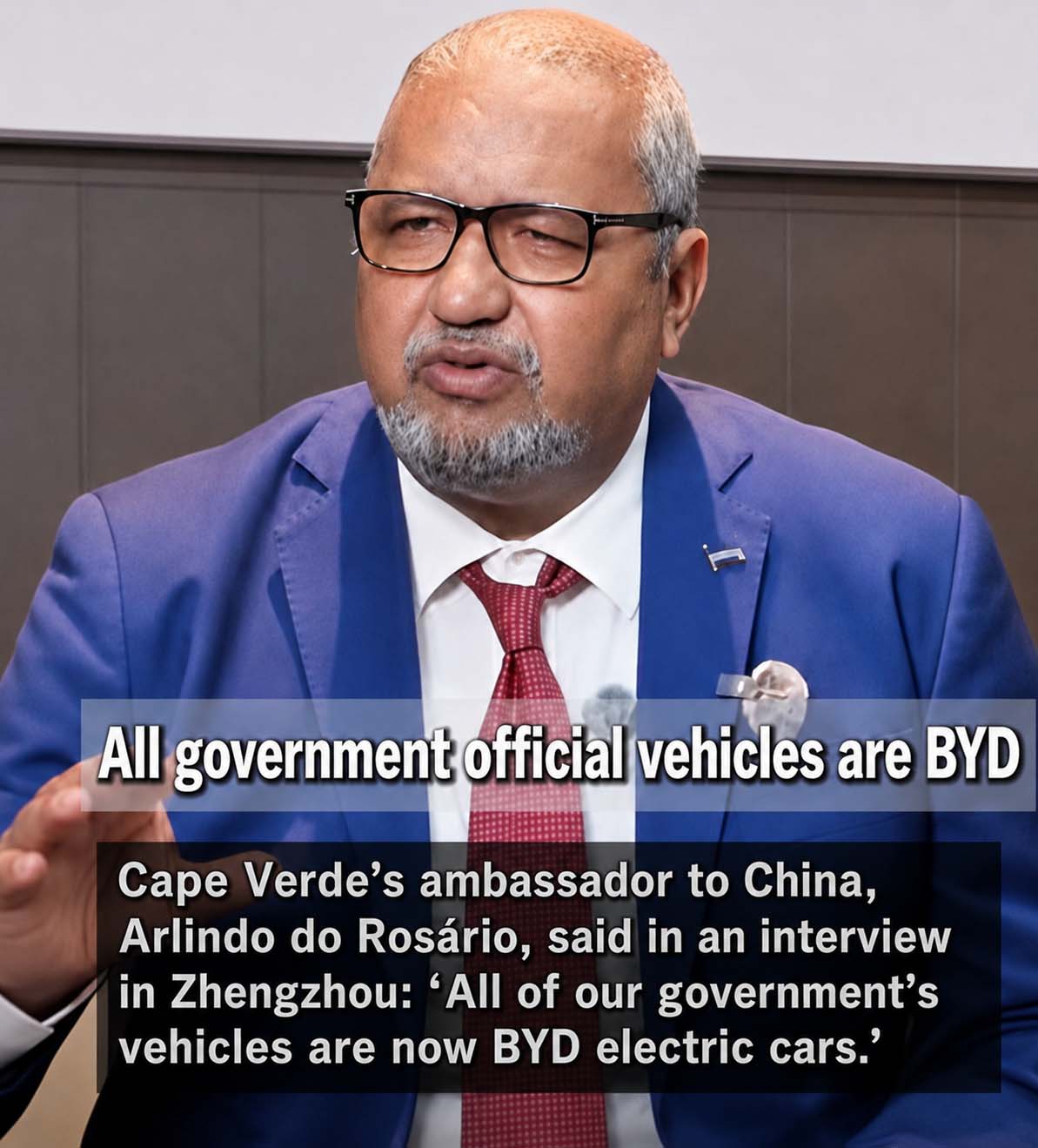
When Cape Verde’s ambassador to China said the island nation would replace its entire government vehicle fleet with BYD models, it was easy to read the announcement as a diplomatic gesture. The strategy behind it looks more commercial than symbolic.
Cape Verde is an archipelago with no domestic oil and gas resources, making imported fuel a persistent cost burden. BYD is not offering only cars. It is presenting an integrated solar-power and electric-vehicle package that suits a country trying to reduce exposure to imported energy. The same logic could appeal to parts of West and East Africa, where governments face similar pressure from fuel-import bills and where official fleets have long been dominated by Japanese and European brands.
The benefit to BYD goes beyond a handful of government orders. Cape Verde’s underdog World Cup story has given the country a level of global attention that no conventional campaign could easily buy. A nation of about 540,000 people has forced its way into the football conversation, and BYD’s badge is now tied to the image of its official vehicle fleet. When a sitting ambassador speaks publicly about the procurement decision, it functions as an official vote of confidence in a Chinese EV brand.
BYD’s broader football strategy is not built around backing one team and waiting for results. It has also supported the Chinese youth football organization Zhongguo Zuqiu Xiaojiang, whose young players have won youth competitions in Thailand and Italy. During the World Cup, BYD helped send the group to Brazil and Mexico for friendlies against local academy teams. The players visited Mexico City’s Azteca Stadium and BYD’s large overseas manufacturing base in Camacari, Brazil.
For the children, seeing a Chinese brand operate a major factory abroad may be more direct than any classroom lesson about global industry. For BYD, the return is not immediate sales. It is the possibility that, years from now, a generation’s memory of football, travel and Chinese manufacturing begins with BYD.
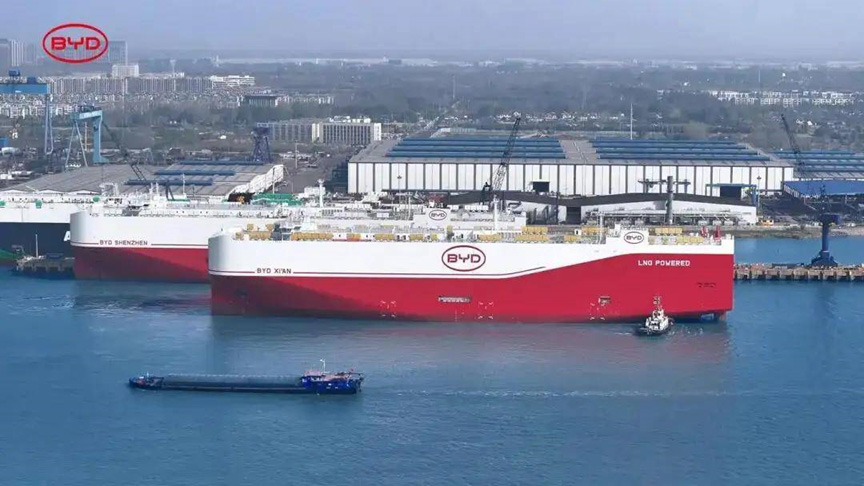
Seen together, BYD’s route is clear. It does not need the official FIFA automotive logo to build recognition. It is working from youth football upward, from African government procurement outward, and through domestic media channels such as CCTV and Xiaohongshu toward ordinary consumers. The same budget can be spent once on short-lived exposure, or invested in longer-term brand memory.
After the tournament, Cape Verde’s Cinderella story will eventually fade. BYD’s charging infrastructure and service network there will not disappear as quickly. Whether the youth players it supports ever reach a World Cup is uncertain. Their association with the brand is likely to last longer.
Changan’s Portugal Bet Shows the Ambition of a New State-Owned Champion
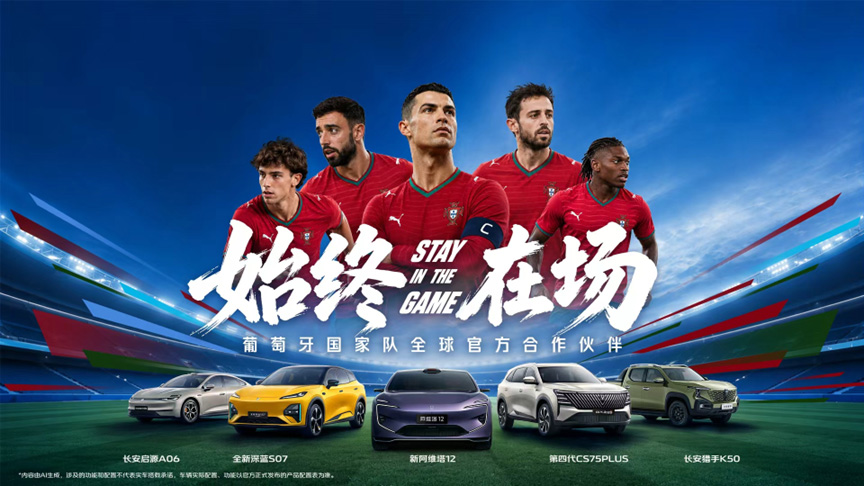
Changan has taken a more direct and expensive route. On May 22, 2026, the company signed an agreement in Lisbon with the Portuguese Football Federation, becoming a global official partner of Portugal’s national team.
The partnership covers the 2026 and 2030 men’s World Cups as well as two women’s World Cups. Total spending is expected to exceed $70.423 million, making it the first global tie-up between a Chinese car brand and one of Europe’s leading football national teams.
Portugal offers Changan an unusually focused platform. The 2026 World Cup in the United States, Canada and Mexico is expected to be Cristiano Ronaldo’s sixth and final appearance at the tournament. Ronaldo has more than 660 million Instagram followers and reaches a global fan base of more than 1 billion. Portugal’s supporters are heavily distributed across Europe, Southeast Asia, Latin America, the Middle East and Africa — regions that overlap with Changan’s main overseas ambitions.
That makes the sponsorship less a broad branding exercise than a targeted media buy aimed at consumers already sitting in Changan’s export map.
The timing also fits Changan’s corporate agenda. After its restructuring into a new centrally administered state-owned enterprise, the company has promoted its “1445” strategy, targeting a place among the world’s top 10 automakers by 2030. It wants overseas sales to rise from 637,300 units in 2025 to 1.5 million units by 2030.
In the first half of 2026, Changan delivered 402,000 vehicles overseas, up 35.1 per cent from a year earlier. Overseas business accounted for 33.6 per cent of total deliveries. To reach its targets, the company needs faster global recognition. Football can help provide it, especially when backed by Changan’s broader new-energy push, including more than $14.085 billion committed under its Shangri-La Plan and battery technologies such as the Golden Shield battery and solid-state programmes.
The Portugal bet still carries risk. The team’s tournament path has already been uneven, from a 1-1 draw with the Democratic Republic of Congo to a 5-0 win over Uzbekistan and a 0-0 draw with Colombia, before moving through the knockout rounds. Its rivalry with Spain ensured global attention, even after defeat. For Changan, the calculation is not short-term return on investment. The larger question is how much space the brand can occupy in the minds of global consumers.
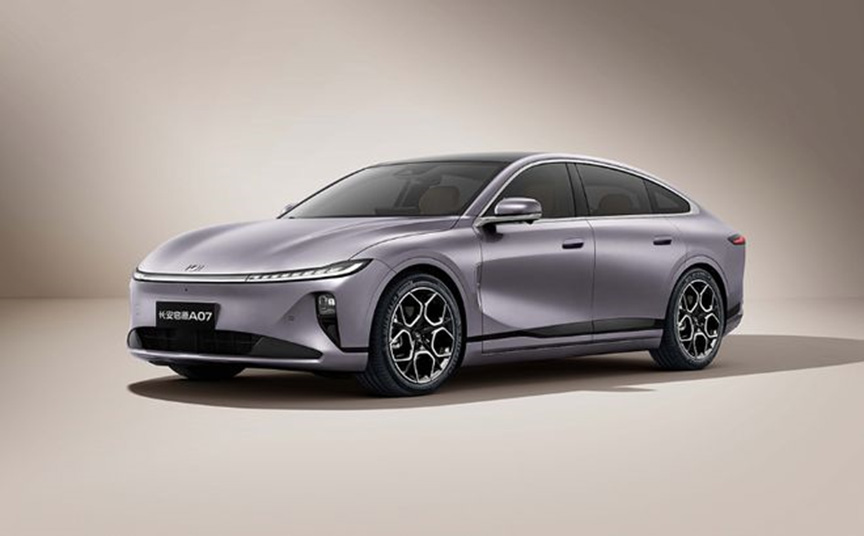
GAC, Chery and Geely Take Different Routes Around FIFA’s Closed Door
With Hyundai and Kia holding FIFA’s automotive category through 2030, the formal route is effectively closed. For GAC, Chery and Geely, that has created an incentive to play a more localised game.
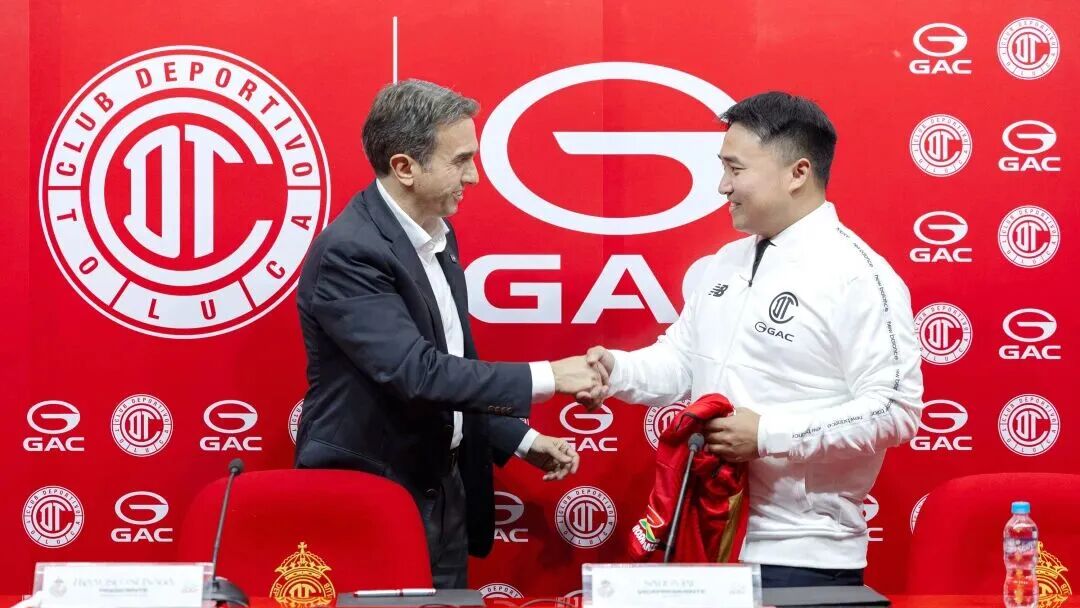
GAC has chosen Mexico. In May, it signed a two-year strategic partnership with Toluca FC, a club founded in 1917 and a three-time Concacaf Champions Cup winner. The choice is not accidental. In 2025, China exported 625,200 vehicles to Mexico, making the country the largest destination for Chinese car exports, ahead of Russia.
By aligning with Toluca FC, GAC is placing itself inside Mexico’s football culture rather than simply entering the car market. The move signals a shift from selling imported vehicles to trying to become familiar within a local community.
Chery has taken a subtler path in Spain. Instead of sponsoring the national team under the Chery name, it has revived EBRO, a Spanish brand with older domestic roots. In April 2024, Chery and Spain’s EV MOTORS signed an agreement, witnessed by Prime Minister Pedro Sanchez, to form a joint venture in Barcelona and restart the EBRO brand.
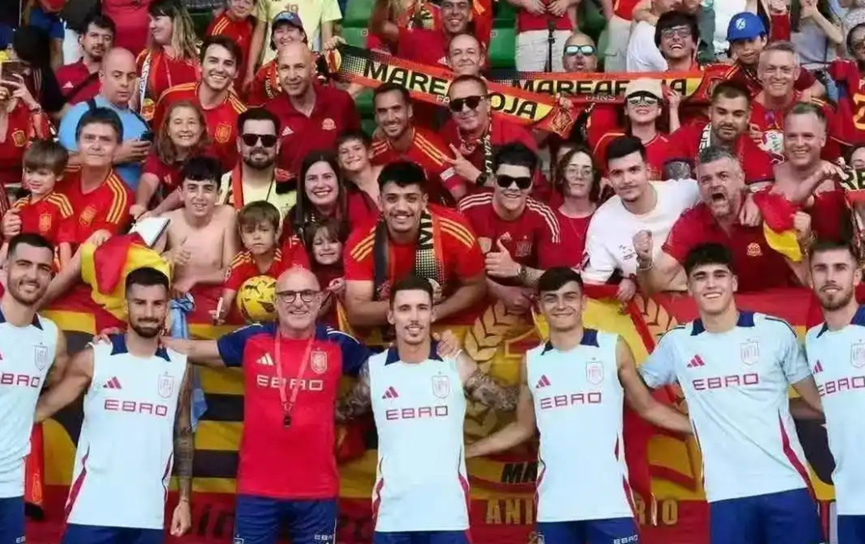
In 2025, EBRO became an official sponsor of Spain’s national football team. As Spain has advanced through the tournament, the EBRO identity has appeared alongside each victory, giving Chery exposure without making the sponsorship feel foreign to Spanish consumers.
The logic is straightforward. For Chery’s financial results, it matters little whether the badge on the steering wheel says EBRO or Chery. For Spanish consumers, the message is different: a local brand is backing the local team. Chery stays behind the curtain and gains emotional access that a direct foreign sponsorship might struggle to secure.
Geely has taken a different route by defending its home market. Its Galaxy brand became a broadcast partner for CCTV’s World Cup coverage and the exclusive title sponsor of CCTV-5’s football programme Haomen Shengyan. It also launched a “Football Carnival Season” with daily car-purchase vouchers.
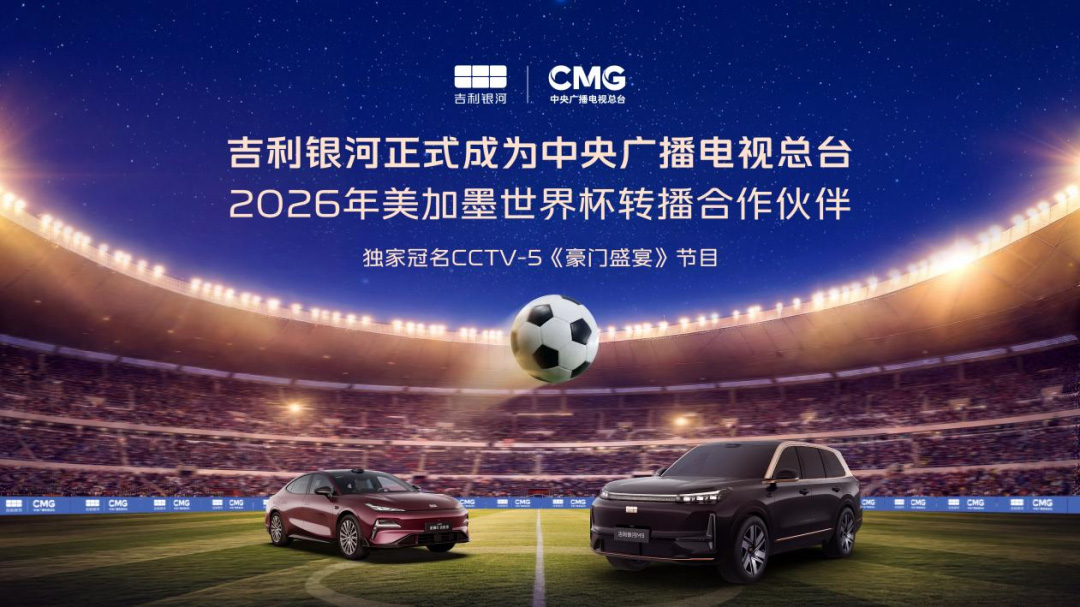
For Geely Galaxy, whose main battlefield remains China, the World Cup is a high-efficiency tool for lifting national brand awareness. At the same time, Geely’s Mexico unit has offered free airport pickup services to vehicle owners attending matches, allowing the company to build brand visibility at home while delivering service touchpoints abroad.
The strategies differ, but the conclusion is the same. Chinese automakers’ globalisation is becoming less linear. The old model of shipping cars abroad and buying advertising space is giving way to a more layered approach built around culture, local identity, services and long-term visibility.
The World Cup Is Becoming a Branding Laboratory for Chinese Automakers
BYD is testing the value of long-term brand infrastructure. Changan is using a $70.423 million football bet to announce the global ambition of a newly empowered state-owned automaker. GAC, Chery and Geely are showing that Chinese manufacturing can travel through many different cultural channels.
The bigger shift is that China’s carmakers are no longer focused only on selling vehicles or buying obvious advertising positions. On a global stage such as the World Cup, they are trying to build brands, ecosystems and local credibility. That may be the real extra time now being played by China’s auto industry.