
The rise of intelligent chassis technology is therefore not just a set of marketing stunts. It is a shift in vehicle dynamics from mechanical calibration toward software-defined control.
From mechanical tuning to digital control
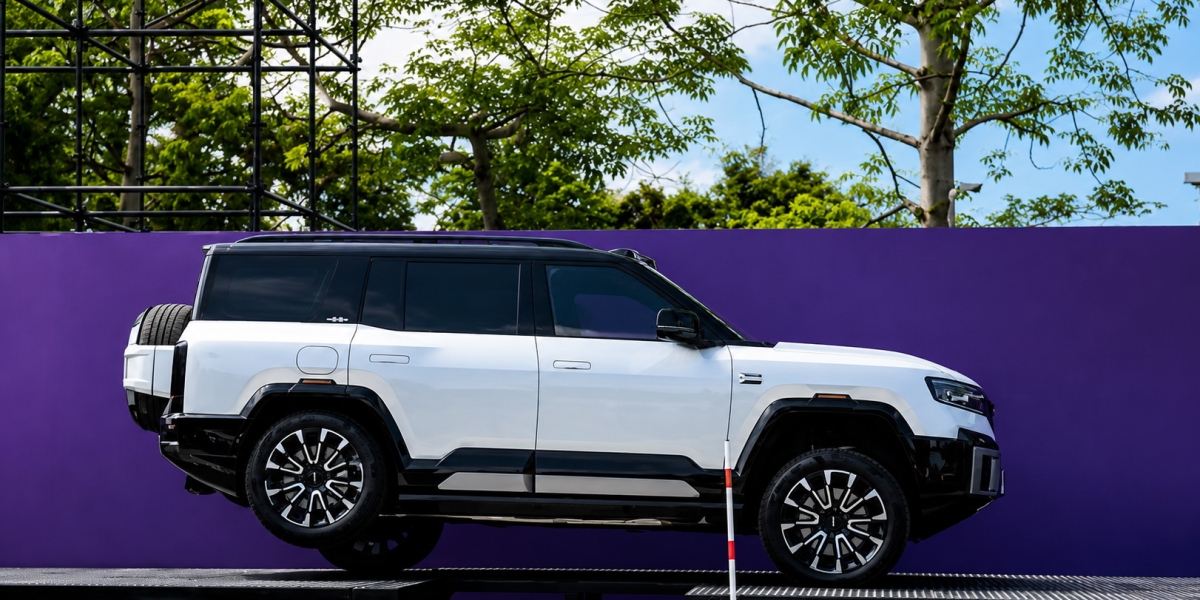
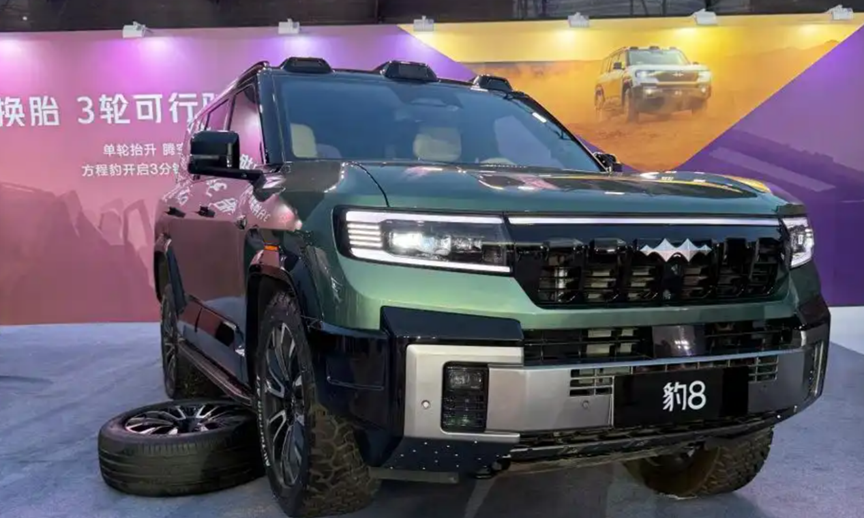
BYD's Fangchengbao Bao 8 drove 100 metres over a rough road with one wheel removed. Nio's ET9 moved its body in time with violin music while a six-level champagne tower on the bonnet stayed upright. These demonstrations attracted attention because they looked theatrical, but their real purpose was technical: showing confidence in the intelligent chassis.
A traditional mechanical chassis is like a feature phone. Its behaviour is largely fixed at the factory, and even the best tuning remains trapped by physical compromises. A smart chassis is closer to a smartphone. It combines sensors, computing units and actuators into a perception-decision-execution system that can read road conditions, calculate control strategies, adjust parameters and improve through OTA updates.
The rise of intelligent chassis technology is therefore not just a set of marketing stunts. It is a shift in vehicle dynamics from mechanical calibration toward software-defined control. The change can be understood through three dimensions: vertical, lateral and longitudinal control.
Vertical control breaks the old suspension compromise
Traditional suspension has always lived with a difficult trade-off. Set it firm and the car handles better, but speed bumps and broken roads become uncomfortable. Set it soft and comfort improves, but cornering brings more body roll. Mechanical systems can reduce that compromise, but rarely remove it.
Smart vertical control tries to break that ceiling. BYD's DiSus-P Ultra shows one route. It replaces the traditional single-valve suspension structure with dual-valve independent control, separating compression and rebound oil circuits so damping can be adjusted independently in each direction.
When one wheel is suspended, the system can transfer hydraulic force from that wheel to the other three within 300 milliseconds. With a maximum total lifting load of 9 tonnes, the system can stabilise the body and keep the angle within 0.5 degrees in the demonstration described by the article. The goal is not to encourage three-wheel driving, but to show that the vehicle can redistribute body support quickly and precisely.
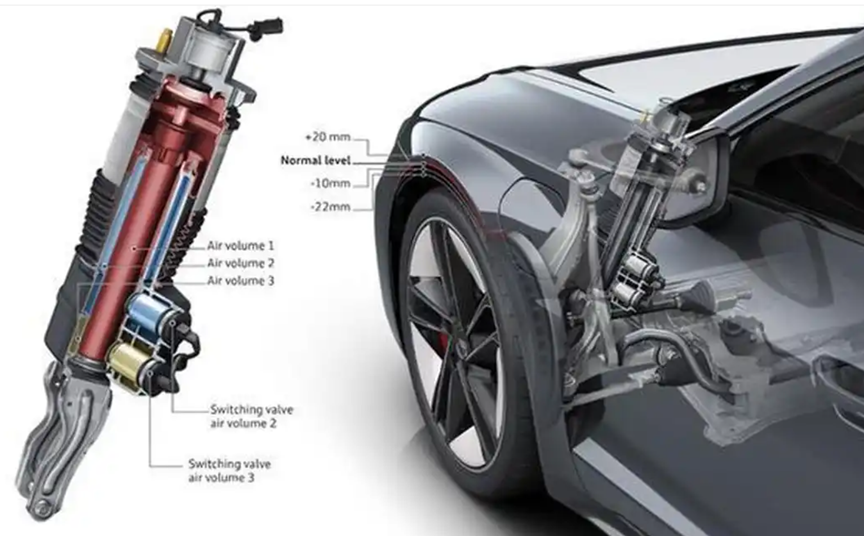
Nio's ET9 uses another approach through its SkyRide intelligent chassis, an integrated hydraulic fully active suspension. Each damper has an independent electro-hydraulic pump, with the motor capable of 1,000 torque adjustments per second and actuator response at 40Hz. Body adjustment speed is described as 60 times that of a traditional air spring. Combined with 4D AI road preview, the system can prepare the suspension before the wheels meet a bump. At 30km/h over a speed bump, body vertical acceleration can be held within 0.1g.
The deeper change is that suspension is no longer fixed at delivery. Vertical performance moves from the limit of mechanical hardware toward the optimisation space of algorithms, sensors and continuously adjustable actuators.
Lateral control gives advanced driving systems faster hands
Intelligent driving systems need a chassis that can execute quickly. If an automated-driving system detects an emergency avoidance path but the mechanical steering system reacts too slowly, the software advantage is wasted. Smart lateral control addresses that execution layer.
The core technology is steer-by-wire. Instead of a traditional mechanical steering column, the system transmits commands electrically. Response is faster, and the steering ratio can be adjusted continuously. At high speed, the ratio can be made slower for stability; at low speed, it can be made quicker for parking and tight manoeuvres.
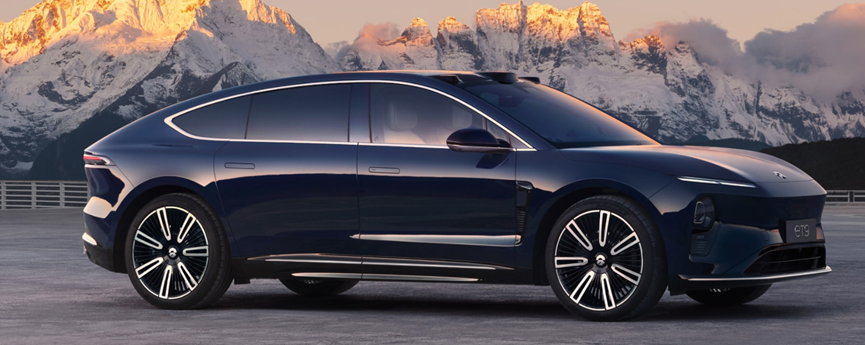
Nio ET9 demonstrates the advantage with its combination of steer-by-wire and 8.3-degree rear-wheel steering. Although the car is 5.3 metres long, its turning diameter is 10.9 metres, close to that of a Volkswagen Golf.
The more important point is integration. Smart lateral control does not work alone; it can coordinate with suspension, electric drive and braking. In an emergency at 80km/h, steer-by-wire can initiate a direction change within 10 milliseconds, rear wheels can counter oversteer, suspension can stiffen to reduce roll, and electric drive can add torque to the outer wheels. The result is a coordinated response rather than a single-system correction.
This gives higher-level automated driving a necessary physical base. Lateral control digitises and adds redundancy to steering while raising the vehicle's stability limit through multi-system coordination.
Longitudinal control changes braking and acceleration
Combustion vehicles often reveal their mechanical separation under braking and acceleration. Brake response can lag, then arrive suddenly. Hard acceleration waits for the gearbox before torque reaches the wheels. Traditional braking and power systems are largely separate, connected by mechanical logic.
Smart longitudinal control brings braking and power together under a unified control strategy. Brake-by-wire systems usually take two forms. EHB retains some hydraulic lines and can respond in about 150 milliseconds, roughly twice as fast as conventional hydraulic braking. EMB removes hydraulic lines and uses motors to clamp the brake pads directly, allowing faster response and more precise force control.
The practical effect can be meaningful. A car that once needed 40 metres to stop from 100km/h may stop within 37 metres with brake-by-wire and electric-drive cooperative braking. Three metres can be the length of a car and can matter in an emergency.
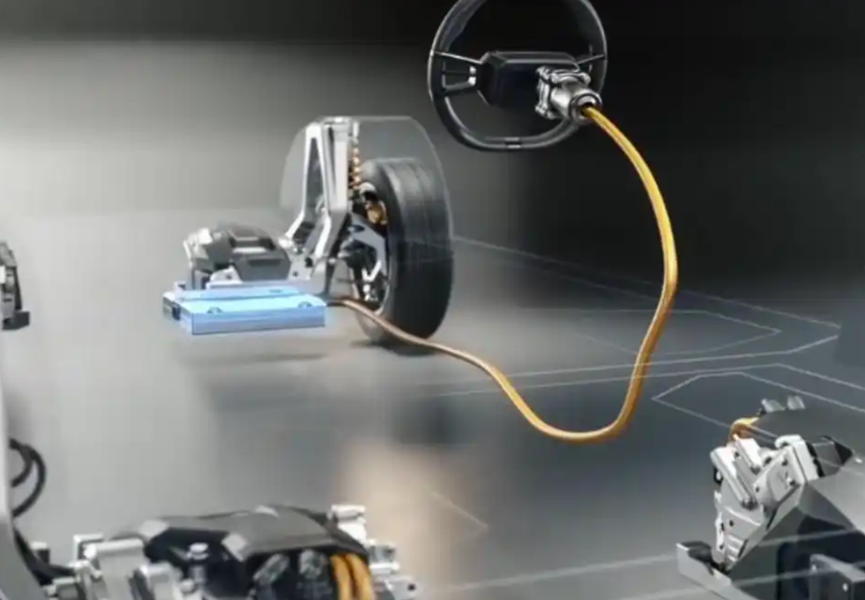
Longitudinal control also improves regeneration. During normal deceleration, the motor can recover energy smoothly, reducing friction-brake use and improving range. On wet roads, the system can control braking force at each wheel more precisely, helping prevent lock-up and shorten stopping distance compared with traditional ABS logic. In adaptive cruising from 0 to 150km/h, acceleration and deceleration can become smoother rather than jerky.
Safety is a major driver. China's new standard scheduled for 2026 requires vehicles above Level 3 automation to carry redundant brake-by-wire systems. If one system fails, another must maintain safe stopping capability; even if one actuator fails, the vehicle should retain 70% braking force.
A new chance for Chinese suppliers
Vertical, lateral and longitudinal control are not separate tricks. A smart chassis becomes powerful when all three dimensions coordinate across the whole vehicle. It is the execution base for advanced automated driving and the physical layer that turns software decisions into stable movement.
That shift changes the competitive rules. In the combustion era, Chinese carmakers spent decades chasing European and Japanese chassis-tuning experience. In the intelligent era, the race moves toward algorithms, actuator supply chains, redundancy, cost control and OTA iteration speed. Those are areas where Chinese companies can compete more directly.
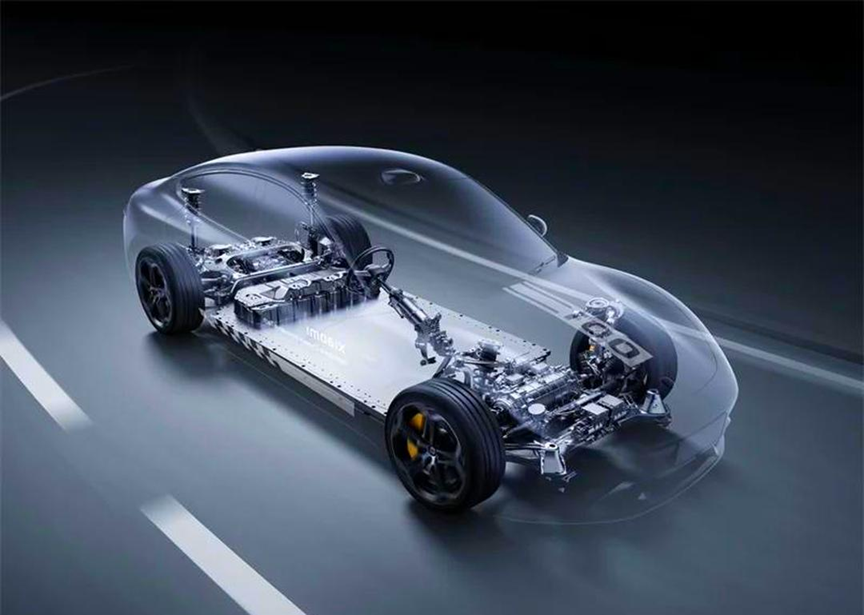
Smart chassis systems are still associated with high-end models, but the technology is moving toward wider adoption. As costs fall and domestic suppliers such as Bethel improve, brake-by-wire and active chassis functions are likely to reach more mainstream vehicles. For China's auto industry, this is less a decorative technology wave than a chance to change the basis of vehicle dynamics competition.