
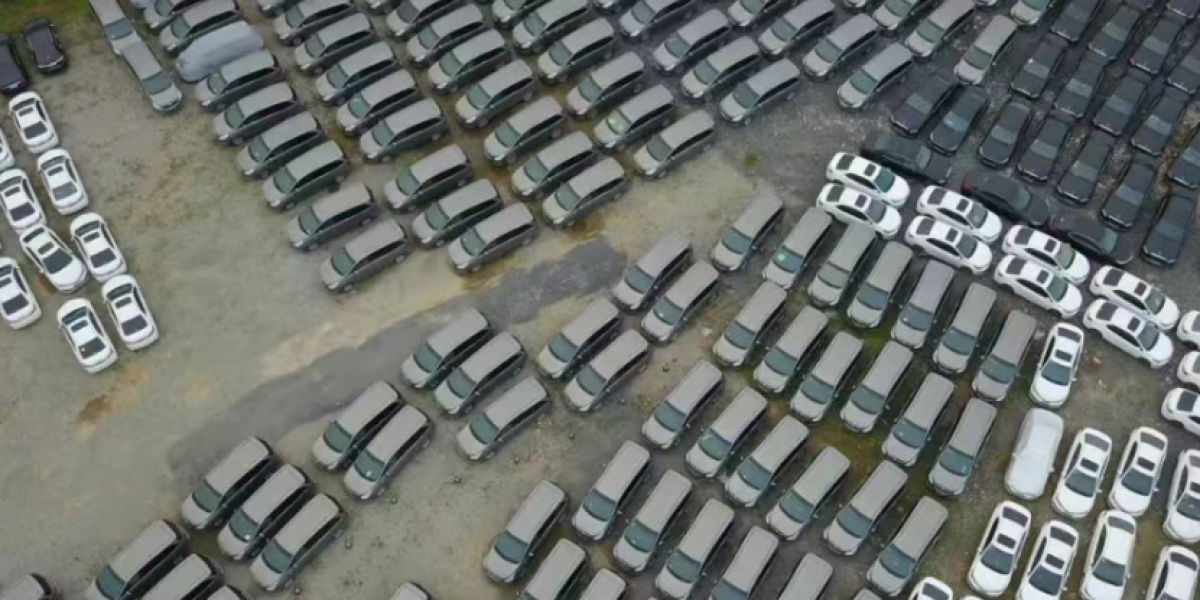
The phrase sounds contradictory: a zero-mileage used car. Yet the practice has become familiar enough in parts of China's auto market to draw attention from regulators, manufacturers and dealers.
A loophole moves into public view
These are vehicles that have already been registered, making them used cars on paper, while having little or no real road use.
The issue moved into the open on May 23, when Great Wall Motor chairman Wei Jianjun described zero-mileage used cars as a strange industry phenomenon. Once a vehicle is registered, he said, it can be counted as sold before returning to the hands of used-car traders. He suggested that thousands of dealers were involved in a market that had become disorderly.
The Ministry of Commerce soon convened a closed-door meeting with manufacturers including BYD and Dongfeng, industry associations and used-car platforms to discuss the practice. Public statements from the companies involved have been scarce, which has only added to the sense that the issue sits uncomfortably close to the industry's sales model.
How a new car becomes a used car without being used
The mechanism is straightforward. A manufacturer or dealer registers a new vehicle, allowing it to appear in licence or insurance data as a sale. The car is then transferred into the used-car channel and sold at a discount as a nearly new vehicle.
For carmakers, the benefit is cleaner sales data. Reported volume can support investor confidence, protect brand momentum and make annual targets look more credible. It can also avoid the appearance of a direct price war, because the discount is moved into the used-car channel rather than displayed as an official reduction on a new model.
For dealers, the practice can turn inventory pressure into cash flow. When manufacturers push stock into the retail network, dealers may register slow-moving cars to meet targets and then move them through secondary channels. Used-car traders can profit again by using trade-in subsidy policies to make the final price look more attractive to buyers.
The result is a grey zone: sales are polished, subsidies can be captured in questionable ways, and consumers are asked to trust a transaction that is less transparent than a normal new-car purchase.

Who benefits from the muddied water
The biggest beneficiaries are unlikely to be small brands with limited volume. For large manufacturers, especially those under pressure to show millions of units of annual sales, the ability to turn stock into registered volume can be valuable. It supports the story that demand remains strong, even when real retail appetite is weaker than the headline figures suggest.
That explains why the issue became sensitive once it was named publicly. A serious crackdown would not necessarily eliminate the chain overnight, but it would make the missing volume harder to replace. It would also leave some manufacturers with fewer ways to discount vehicles while preserving a public stance against price wars.
The silence from many carmakers is therefore telling. If zero-mileage used cars are treated as a normal market tool, companies can keep using the channel while claiming healthy demand. If regulators classify the practice as a disorderly market behaviour, the same companies may have to explain how much of their sales strength was real.
Cheap cars can still carry hidden costs
Some dealers and online commentators have defended zero-mileage used cars as a source of cheaper vehicles for ordinary consumers. Used-car sellers have even used the controversy as marketing, presenting themselves as the providers of affordable cars rather than participants in a distorted sales chain.
That argument ignores the risks embedded in the grey zone. Some of these vehicles may have altered specifications or manufacturer-specific configurations that are not clearly disclosed. Warranty terms, after-sales obligations and consumer-protection documents can become harder to enforce once the car has been registered and resold through another channel.
Media reports cited in the original article said complaints related to zero-mileage used cars rose 210% in 2024. That points to a trust problem, not just a pricing opportunity. A buyer who thinks they are simply getting a cheaper new car may instead be taking on uncertainty around warranty coverage, vehicle history and legal responsibility.
The international cost of distorted sales
The damage can also spread beyond China. Large batches of zero-mileage used cars have reportedly moved into overseas markets. Some vehicles exported through informal or secondary channels may not have undergone full local adaptation, testing or service preparation. When complaints rise abroad, the reputational cost falls on Chinese brands as a whole, not only on the traders who moved the stock.
That matters because China's carmakers are trying to build credibility in Europe, Southeast Asia, the Middle East and Latin America. Export success depends not only on low prices, but on transparent distribution, reliable service and confidence in the brand. A market flooded with loosely channelled vehicles can make that task harder.
The zero-mileage used-car controversy is therefore more than a domestic dispute over cheap cars. It is a test of whether China's auto industry can separate genuine competitiveness from accounting-driven volume. If official sales data, subsidy flows and retail pricing are all blurred, the market may look larger and healthier than it is.
A necessary regulatory test
Short-term beneficiaries can present the practice as a win for everyone: carmakers move inventory, dealers recover cash, traders earn margins and consumers see lower prices. The longer-term picture is different. A market built on disguised discounts and registered-but-unsold vehicles weakens trust, rewards aggressive accounting and penalises companies that build demand more transparently.
Regulators are right to examine the practice. The question now is whether the industry will accept clearer rules on registration, resale, subsidy eligibility, warranty disclosure and export channels. Without that, zero-mileage used cars will continue to flatter sales data while eroding the foundations of the market.