
A stake sale by Ford’s longtime Chinese partner is offering a telling glimpse into how quickly the balance of power has shifted in the world’s largest car market.
Chongqing Changan Automobile, one of China’s major state-backed carmakers and Ford’s main manufacturing partner in the country, has put its 40% holding in Changan Ford New Energy Automobile Technology up for sale. The minimum asking price is 154 million yuan, or about $23 million.
The company at the centre of the transaction is not Ford Motor Co. itself, but a Chinese joint-venture subsidiary linked to the broader Changan Ford business. Changan Ford owns the remaining 60%, while Changan Automobile holds the 40% stake now being offered through the Chongqing United Assets and Equity Exchange.
For overseas readers, the structure matters. Ford has operated in China for years through Changan Ford, a joint venture with Changan Automobile. Such partnerships were once the standard route for foreign carmakers seeking access to the Chinese market. They combined foreign brands and technology with local manufacturing, distribution and regulatory support.
That model is now under pressure. Chinese automakers have become increasingly competitive in electric vehicles, software, supply chains and manufacturing speed. Foreign groups that once supplied the technology are now often trying to keep pace with their Chinese partners.
A Profitable Unit, but a Shrinking Business
At first glance, the sale looks counterintuitive. Changan Ford New Energy reported 913 million yuan in revenue in 2025, or about $135 million, and net profit of 52.76 million yuan, equal to roughly $8 million. In a Chinese joint-venture sector under mounting pressure, that profit was not insignificant.
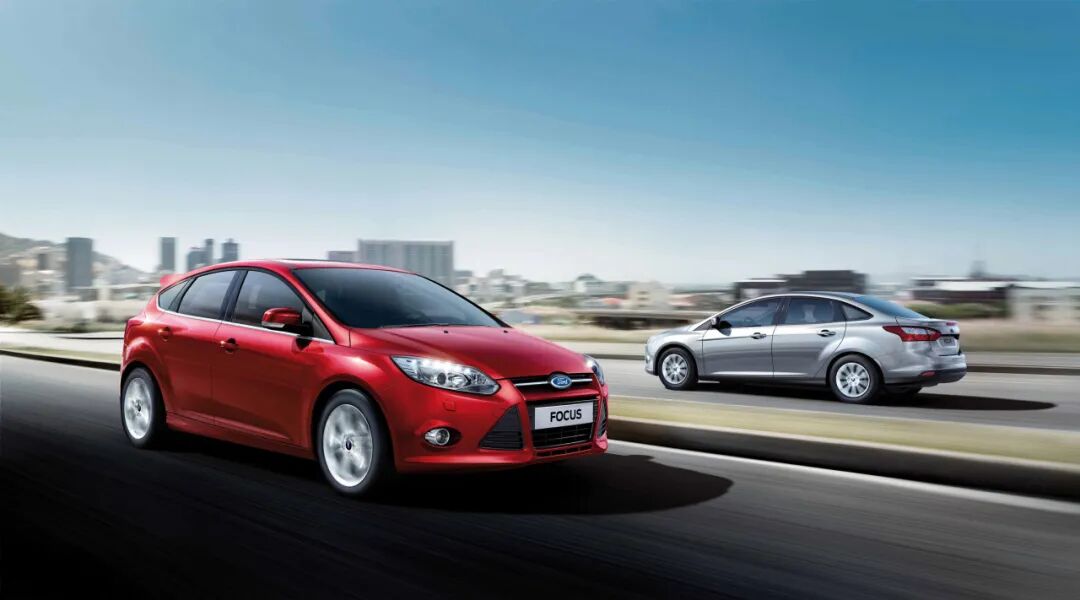
The underlying picture is less reassuring. The company’s net margin was around 5.8%, modest by the standards of a business supposed to be positioned around the next generation of mobility. Its product base also appears only loosely connected to pure electric vehicles. Models linked to the business include the Focus, a traditional petrol car, and the Mondeo Sport, a hybrid.
The Ford Mustang Mach-E, the company’s clearest electric vehicle offering in China, has performed poorly. Sales reportedly reached only 35 units in 2025, with no recorded deliveries after August. For a business carrying “new energy” in its name, that is a weak foundation.
The 2026 figures are more alarming. In the first four months of the year, the company reported revenue of minus 102,900 yuan, or roughly minus $15,000. Negative revenue usually points to returns, rebates or accounting offsets exceeding new sales. In practical terms, it suggests that the operating base has contracted sharply.
Ford’s China Problem Is Bigger Than One Subsidiary
The sale comes at a difficult moment for Ford’s China business. Changan Ford was once one of Changan Automobile’s most valuable assets. At its peak in 2016, the joint venture generated nearly 9 billion yuan in investment income for Changan, equivalent to about $1.33 billion.
That era has passed. Changan Ford sold nearly one million vehicles a year at its height, but its annual volume has fallen sharply. In 2025, wholesale sales were about 121,500 units, while retail sales were roughly 99,400 units, below the 100,000-unit level often viewed in China as a rough survival threshold for mainstream car brands.
The decline continued into 2026. Retail sales in the first quarter were about 17,000 units, down roughly 31% from a year earlier. The Mondeo accounted for almost half of Changan Ford’s 2025 sales, leaving the brand heavily dependent on a single model.
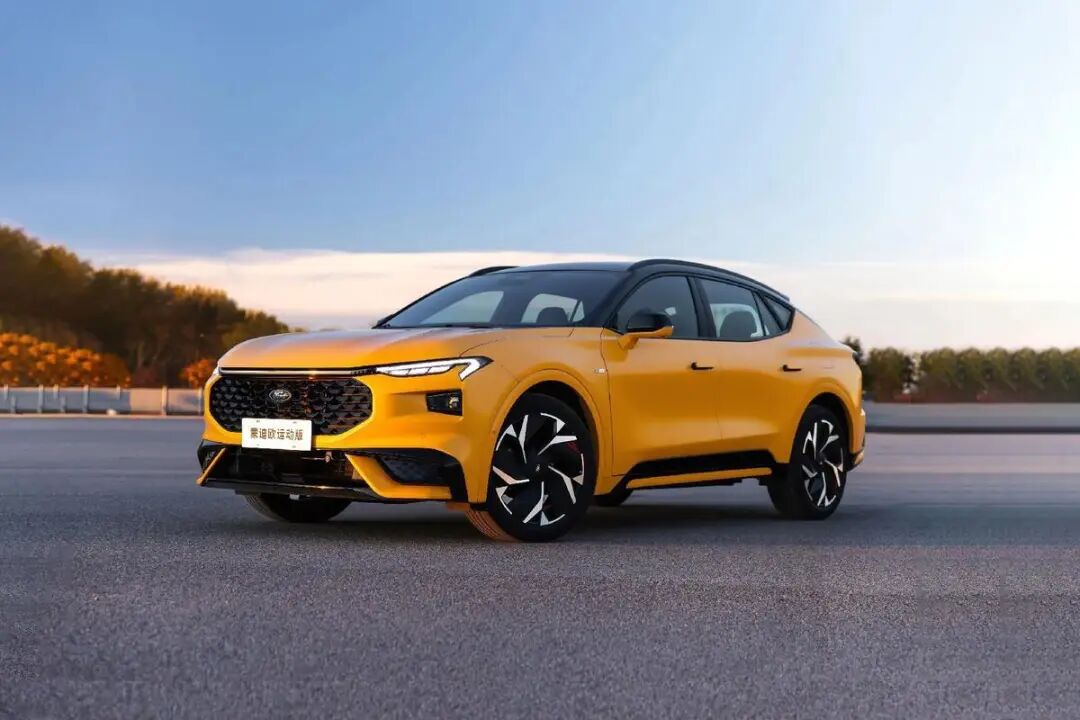
The product line has also narrowed. Once known in China for models such as the Focus, Kuga and Mondeo, Changan Ford now relies mainly on a smaller range of locally built petrol and hybrid vehicles, including the Mondeo, Edge L, Explorer and Escape successor models. Its electric line-up remains thin.
The financial trend tells the same story. Changan Ford’s 2025 revenue fell about 25% to 36.29 billion yuan, or roughly $5.36 billion. Net profit dropped more than 54% to 952 million yuan, about $141 million. Compared with its 2016 profit contribution, the business has lost much of its former weight.
Why Changan May Be Pulling Back
Changan’s decision to sell its stake in the EV subsidiary should be seen in the context of its own rapid shift toward domestic new-energy brands. The company has been investing heavily in its own electric and smart-car platforms, including Deepal and Avatr, the latter developed with support from Huawei and CATL.
That changes the logic of the Ford partnership. In the past, Chinese carmakers needed foreign joint ventures for brand strength, engineering know-how and manufacturing systems. Today, groups such as Changan increasingly have their own electric platforms, software architecture, battery supply relationships and intelligent-driving partners.
For Changan, a small Ford-linked EV subsidiary with weak electric sales may no longer be a strategic priority. Selling while the company still has book value is a rational move if the asset is unlikely to become central to its future electric-vehicle plans.
The move also reflects a broader reallocation of corporate attention. Since June 2025, Changan Automobile has stopped disclosing Changan Ford’s monthly sales as a separate line item in its production and sales reports, folding the figures into broader totals. The change has been widely read in the industry as a sign that the joint-venture business is no longer the group’s main growth story.
Ford’s Electric Strategy Has Yet to Translate in China
Ford has not ignored the rise of Chinese EV makers. Chief Executive Jim Farley has repeatedly described Chinese groups such as BYD and Geely as formidable competitors. He has also spoken admiringly of Xiaomi’s SU7 electric sedan after having one brought to the US for testing.
Corporate strategy has moved more slowly than executive rhetoric. Ford has announced a next-generation universal EV platform, but there has been no clear commitment that Changan Ford will receive it in China. That leaves the joint venture exposed in a market where local rivals refresh models quickly and compete aggressively on software, range, price and driver-assistance features.
Ford’s global electric-vehicle strategy has also been unsettled. The company has shifted between battery-electric ambitions, hybrid expansion and a more selective approach to large EV projects. Financial pressure in North America and Europe has made large-scale investment decisions more difficult.
For Changan Ford, that uncertainty is costly. Without timely access to Ford’s most competitive EV technology, the Chinese joint venture risks relying on adapted combustion-engine platforms or imported models that already feel dated against local competition.
The Power Balance Has Shifted
The deeper issue is that the old joint-venture bargain is losing its force. Ford still brings global brand recognition, engineering heritage and a dealer base. Changan now brings manufacturing scale, local supply chains, electric-platform experience and access to China’s fast-moving smart-car ecosystem.
That is a reversal from the early decades of China’s auto industry, when local companies often relied on foreign partners to learn modern carmaking. In the electric-vehicle era, Chinese manufacturers are no longer simply students of global groups. In many areas, they are setting the pace.
Changan Ford therefore sits in an increasingly uncomfortable position. It is not Ford’s global technology flagship, because the latest platforms have not been prioritised for China. It is no longer Changan’s central profit engine, because the Chinese group’s own brands are now more important to its future.
The stake sale captures that ambiguity. Changan appears willing to reduce its exposure to a Ford-linked EV operation that has struggled to find a clear role. Changan Ford, the majority shareholder, has not publicly moved to block the transaction or signal a strong desire to buy the stake itself.
A Symbol of a Changing Industry
The sale of a 40% stake in a small EV subsidiary will not by itself determine Ford’s future in China. It does, though, point to a larger structural change.
For decades, global automakers saw China as a market where foreign brands, technology and scale could produce exceptional returns through local partnerships. That formula worked well for Volkswagen, General Motors, Toyota, Ford and others. It helped build China into the world’s largest car market.
The electric-vehicle transition has rewritten the terms. Chinese brands are stronger, faster and more vertically integrated than ever. Foreign carmakers are being forced to prove that they still bring technology and products Chinese consumers cannot easily get elsewhere.
For Ford, the challenge is not simply to defend an old joint venture. It is to define what role it can still play in a market increasingly led by Chinese companies. For Changan, the question is different: how much capital and management attention should still be tied to a partnership that no longer defines its future?
The answer may be emerging through this stake sale. The golden age of China’s foreign auto joint ventures was built on foreign technology and Chinese market access. In the EV era, that balance is fading fast.