
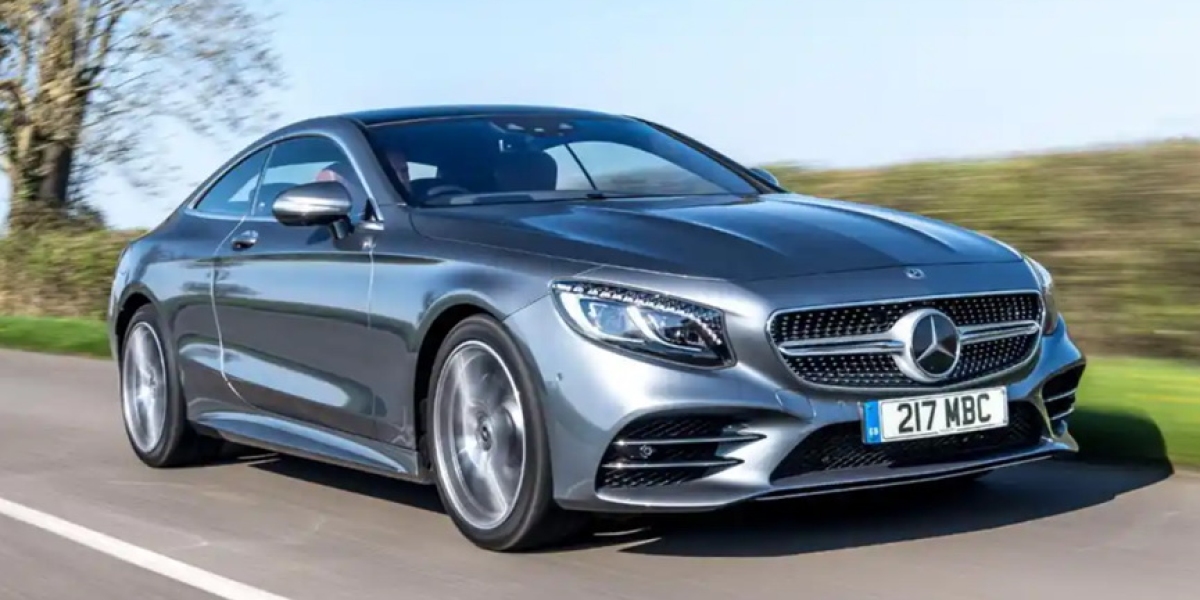
Mercedes-Benz is facing a wave of complaints in China after an official recall update allegedly reduced the usable battery capacity and driving range of some EQC electric SUVs.
A recall becomes a trust problem
More than 400 owners have reportedly joined rights-protection groups, saying their vehicles lost around 100 kilometres of range after the update.
The controversy cuts into one of Mercedes' most important assets in China: the belief that a premium badge brings certainty, service quality and long-term trust. Some EQC owners paid close to $70,000 for a vehicle that, after the recall, they say became materially less capable.
Mercedes executives have repeatedly emphasised safety, long-term thinking and service standards. Yet the EQC dispute shows the risk when brand language collides with owner experience. If a luxury company asks customers to accept a major performance reduction in the name of safety, it must explain clearly what changed, why it changed and how owners will be treated.
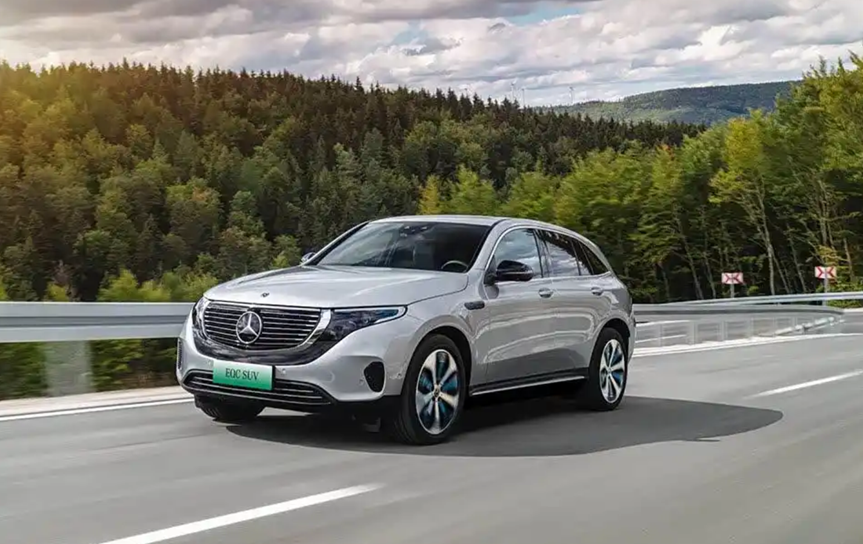
The battery was made safer by making less of it available
In September 2025, Beijing Benz recalled 13,447 EQC vehicles, citing a battery-management software defect that could, in extreme cases, lead to thermal runaway and fire. The recall was filed with China's State Administration for Market Regulation and was procedurally compliant. The dispute concerns disclosure.
Owners say Mercedes did not clearly tell them that the update would permanently reduce available range and battery capacity. Before the update, the battery capacity displayed at 77.88kWh. After the update, owners reported 62.84kWh. In practical terms, they saw the capacity fall by about 20% almost overnight.
Technically, the process is straightforward. By changing battery-management-system parameters, lowering the charge cut-off voltage and narrowing the state-of-charge window, a manufacturer can make a battery operate within a more conservative range. That may reduce risk, but it also reduces usable energy.
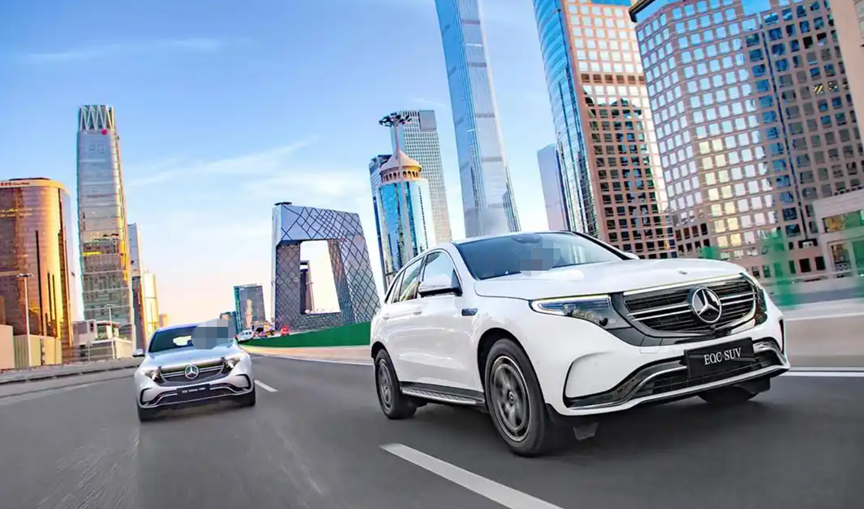
The harder question is why Mercedes chose this route. The EQC is an electric vehicle derived from a combustion platform, and its battery thermal-management limitations have long been part of the discussion around the model. After the defect investigation began, Mercedes effectively faced two broad options: replace batteries at very high cost, or limit usable battery capacity through software at a far lower cost. The company appears to have chosen the second option.
That makes the issue look less like a pure technical judgement and more like a cost-allocation decision. If reducing capacity by 20% is justified as safety, owners can reasonably ask where the boundary lies. Would a deeper reduction be safer still? If software can remove usable battery capacity, what stops similar logic from being applied to power output or speed?
Brand narrative meets owner frustration
Mercedes China executive Duan Jianjun has often used emotional brand language, comparing Mercedes service expectations with the Ritz-Carlton standard and emphasising that the company's 140-year history is built for the long term. Such messages are powerful when the ownership experience supports them. They become vulnerable when customers feel ignored.
In this case, owners have complained of indifferent responses from dealers and the manufacturer. Some say they were told the reduced range was a normal phenomenon. That phrase may be more damaging than the software update itself, because it suggests the customer's loss is being treated as routine.
The wider quality picture has not helped. In 2025, Mercedes issued 16 recalls in China involving 146,000 vehicles, covering issues from wheel-speed sensors and 12-volt batteries to navigation failures and instrument-screen blackouts. Design criticism and service complaints have added to the pressure on the brand.
The financial context is also difficult. In the first quarter of 2026, Mercedes' China sales fell 26.9% to 111,600 vehicles. Group revenue in the quarter was 31.602 billion euros, down 4.9%, while net profit fell 17.2% to 1.433 billion euros. Cost-saving decisions that reduce owner confidence are unlikely to repair that trend.
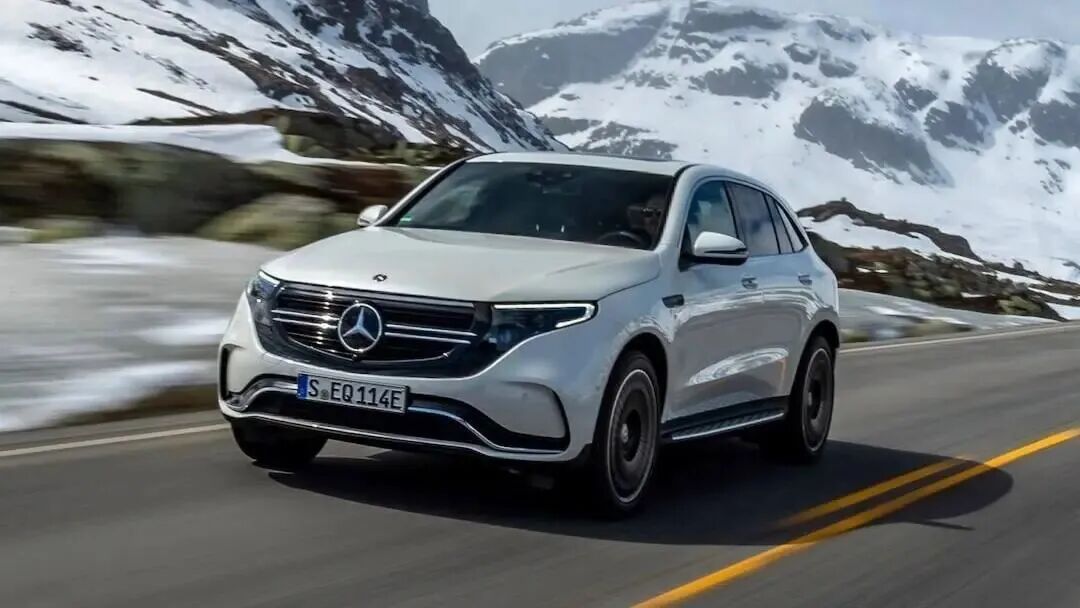
The most loyal buyers are the ones at risk
EQC buyers are not ordinary bargain hunters. Paying roughly $63,000 to $84,000 for a converted-platform electric SUV with about 400 kilometres of range required strong faith in the Mercedes brand. These owners bought more than specifications; they bought the reassurance attached to the three-pointed star.
That is why the alleged battery limiting is so sensitive. Owners reported reduced range, slower charging and weaker performance after the update. Legal observers cited in the original article argued that a unilateral software change reducing core vehicle performance could infringe consumers' rights to know and to fair dealing, and may constitute a breach of contract.
China's Ministry of Industry and Information Technology and the State Administration for Market Regulation jointly issued OTA-related rules in March 2026, including a prohibition against using software updates to reduce battery capacity or downgrade specifications. That regulatory direction makes the Mercedes dispute more than a customer-service issue.
A premium badge cannot absorb every shock
Mercedes' China business is already under strain. Sales in 2025 fell 19% to 575,000 vehicles, and the first quarter of 2026 brought no recovery. The EQA's monthly sales reportedly dropped from 81 units in December 2025 to three units in April 2026, while EQA and EQB combined monthly sales were only 333 units.
Global financial pressure is sharper still. In fiscal 2025, Mercedes revenue fell 9.2% to 132.2 billion euros, while net profit dropped 48.8% to 5.331 billion euros, the weakest result since 2019. China revenue fell 29%. Media reports have said the company launched major workforce reductions, with cuts in China's sales and finance departments reaching as much as 15%.
Against that backdrop, a software-based battery limit looks like a cheap fix to an expensive hardware problem. It may save hundreds of millions of dollars in potential battery replacement costs, but it transfers value loss to owners. That is dangerous for a luxury brand, because its most valuable customers are precisely those who are loyal, high-spending and likely to repurchase.
Mercedes can still argue that safety required action. What it cannot afford is the impression that safety became a shield for cost transfer. In premium cars, trust is part of the product. Once owners believe that trust has been used against them, the damage reaches beyond a single model.