
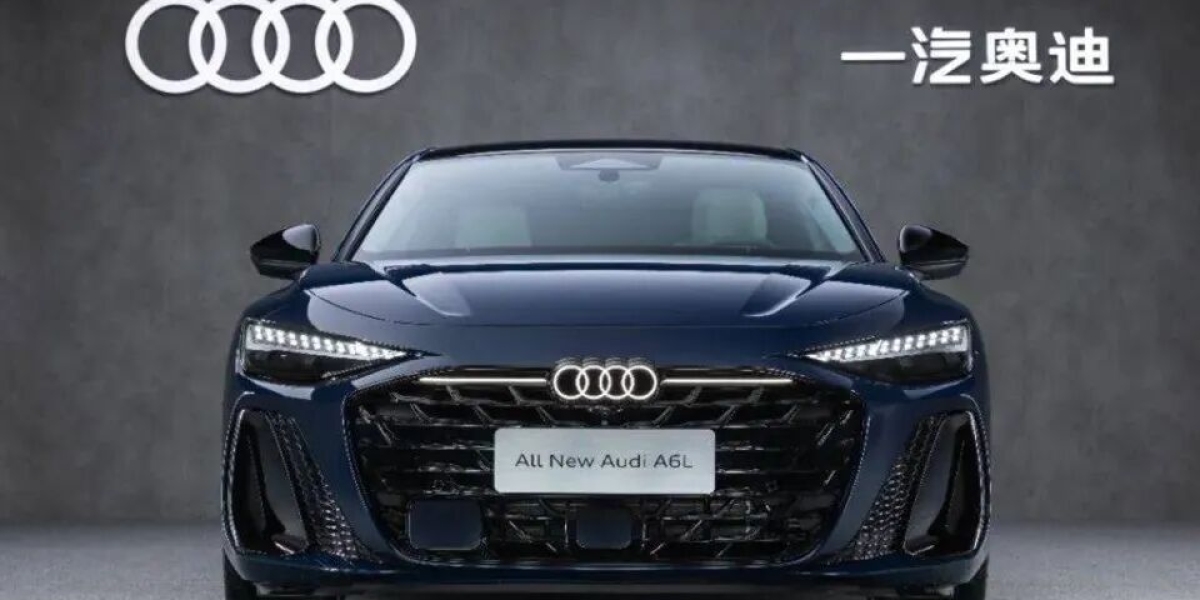
China’s luxury-car market is no longer the predictable preserve of German prestige brands. Consumer tastes are shifting, domestic electric-vehicle makers are moving upmarket and the old assumptions about badge power are being tested. For FAW-Audi, the launch of the new Audi A6L is less a routine model change than a signal that the company has begun to rethink how it competes in China.
A sharper answer to a changing market
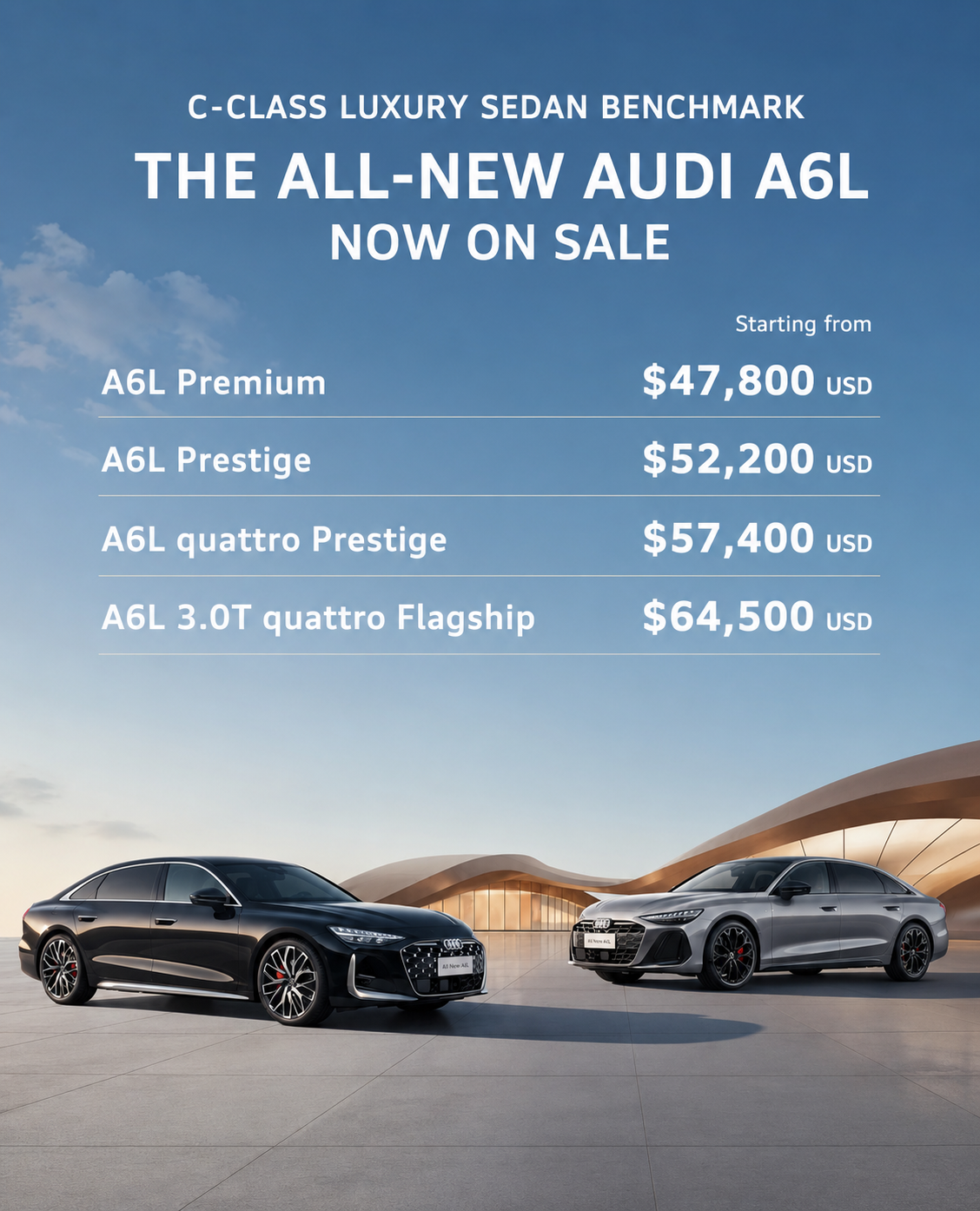
The new A6L arrives with four versions priced from about US$48,000 to US$64,000, converted from its Chinese-market price range and rounded to the nearest US$1,000. That puts the car directly into the heart of the executive-luxury segment. It also comes with purchase incentives, trade-in support and financing offers, including two years of interest-free payments on a five-year loan.
Built on Audi’s new PPC combustion-engine platform and heavily adapted for China, the A6L is meant to do more than defend an ageing nameplate. It reflects three changes at FAW-Audi: a more pragmatic strategy, a more competitive product and a deeper localisation effort. Together, they show how a traditional luxury brand is trying to regain relevance in a market that has changed faster than many global carmakers expected.
A pragmatic strategy, not an electric-only bet
For years, established luxury brands have struggled to decide how quickly to move away from petrol cars in China. Some pushed too hard into electric vehicles before their products were ready. Others moved too slowly and lost momentum to domestic brands. The result has often been an uncomfortable middle ground: weaker sales of combustion models and limited traction for electric ones.
FAW-Audi appears to have reached a clearer conclusion. Electrification remains the long-term direction of travel, but in China’s mid-to-large luxury-sedan segment, combustion cars still have a role. For business users and long-distance drivers, reliability, range and refuelling convenience remain important considerations.
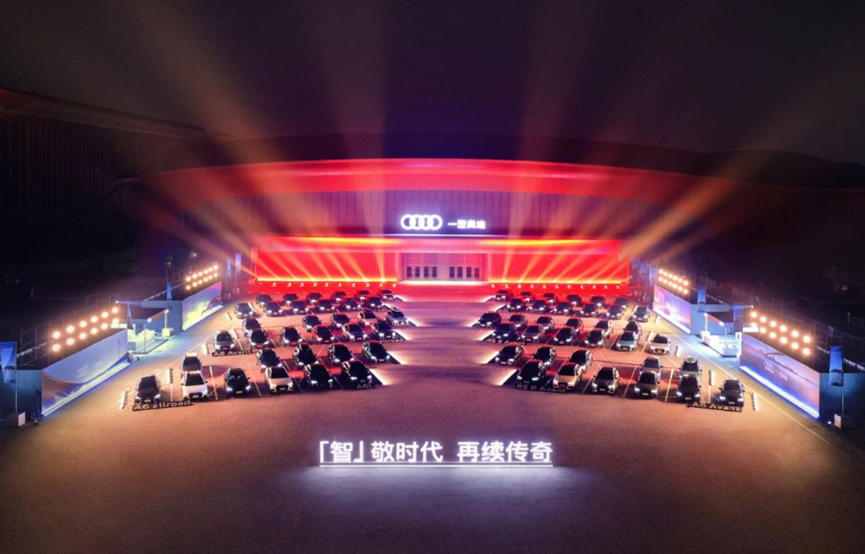
That explains the company’s “dual-track” approach. On one side, Audi is using the PPC platform to deepen the strengths of its combustion luxury cars and protect its sales and profit base. On the other, it is continuing to prepare its PPE electric-vehicle platform, but without presenting electrification as a replacement for everything else overnight.
The pricing of the new A6L underlines that shift. The previous model started at about US$63,000 after conversion and rounding. By positioning the new car from roughly US$48,000, FAW-Audi is acknowledging the pressure from Chinese premium EV makers and the need to compete with more than heritage alone.
The incentives point in the same direction. A reservation benefit worth roughly US$1,000, additional purchase support of about US$1,000 and trade-in subsidies of about US$1,000 are modest by the standards of China’s increasingly aggressive car market. But for a traditional luxury brand, they mark a more realistic response to buyers who now expect value, technology and brand reputation to arrive together.
A product reset built around Chinese buyers
A strategy only matters if the product can support it. The new A6L is FAW-Audi’s attempt to show that a combustion luxury car can still feel modern in China, where intelligent cockpits and advanced driver-assistance systems have become central to the buying decision.
Older luxury models often relied on a familiar formula: incremental design changes, improved trim and the assumption that the badge would do much of the work. The new A6L takes a more direct approach. It keeps Audi’s traditional strengths in ride, handling and mechanical refinement, while addressing one of the biggest weaknesses of legacy fuel-powered cars in China: the perception that they are behind on software and smart features.
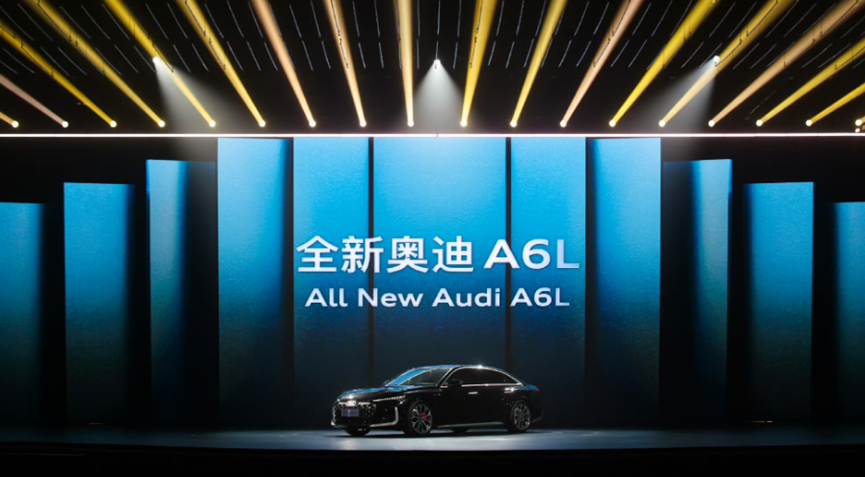
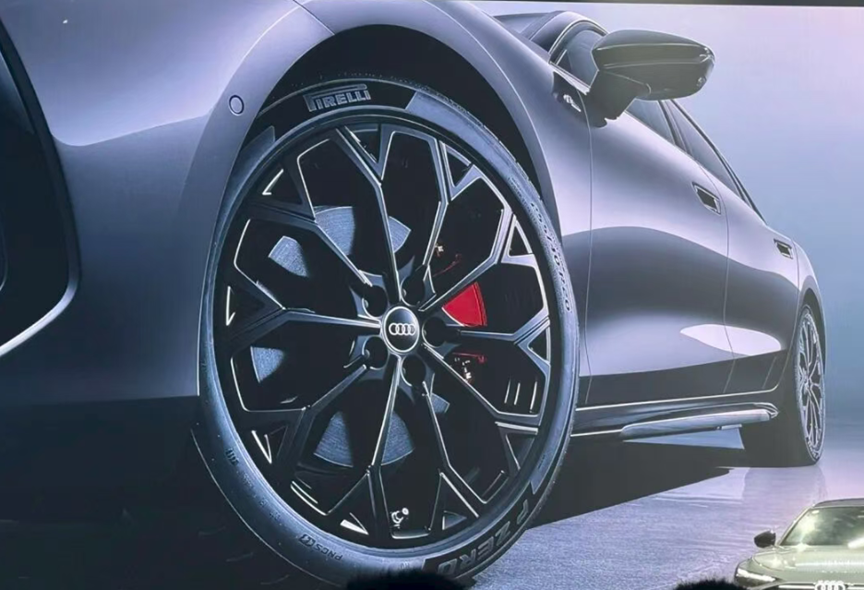
The China-built version is not simply a stretched global sedan. Its body and wheelbase have been adapted to give rear passengers more space, a priority for Chinese executive-car buyers. It also offers different front-end designs, including more formal and sportier treatments, as well as China-specific paint options. The aim is to appeal both to business users and to younger buyers who want a more dynamic image.
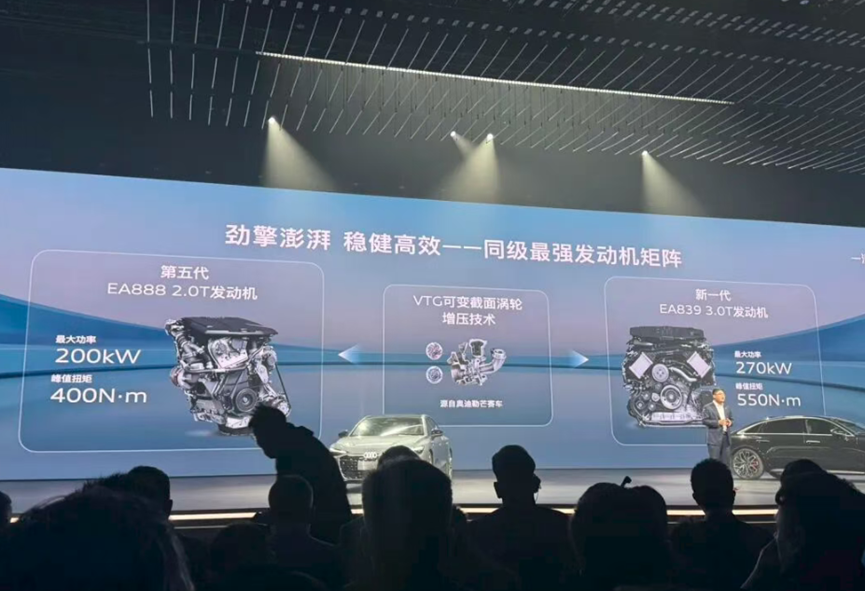
Under the skin, the A6L continues to lean on Audi’s mechanical reputation. It offers a 3.0-litre V6 option, alongside 2.0-litre engines in different outputs and an HDI dual-motor intelligent hybrid system. Adaptive air suspension and all-wheel steering are intended to preserve the comfort and composure expected of a premium sedan.
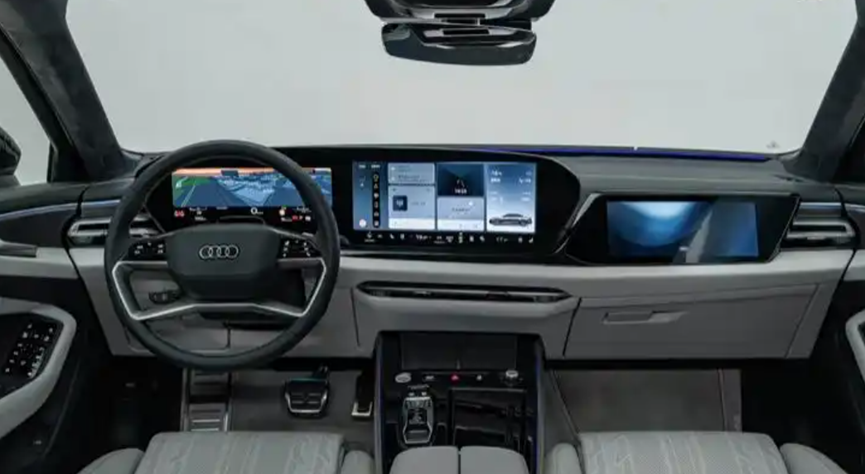
The bigger change is inside the cabin and in the software stack. The car features a multi-screen interface, a customised voice assistant and Huawei’s Qiankun intelligent-driving technology, supporting higher-level assisted driving on highways and urban roads, as well as automated parking functions. That matters because Chinese buyers increasingly compare luxury cars not only with Mercedes-Benz and BMW, but also with technology-heavy domestic EVs.
For Audi, the message is clear: the company does not want the A6L to be seen as a legacy petrol sedan with a few digital add-ons. It wants it to be viewed as a modern luxury car that happens to retain the advantages of a combustion platform.
Localisation becomes the real battleground
The most important shift may not be the price or the powertrain, but the way the car has been developed for China. For many international luxury brands, localisation once meant local production, a longer wheelbase and a handful of market-specific features. That is no longer enough.
China has become too competitive, too digital and too fast-moving for products designed mainly around European or global assumptions. When key decisions remain concentrated at headquarters, Chinese buyers are more likely to feel that a car has been adapted for them rather than created with them in mind.
The new A6L suggests FAW-Audi is moving into a different phase. Chinese teams have been more deeply involved in product definition, design, feature tuning and software adaptation. That influence can be seen in the cabin layout, body dimensions, intelligent-driving calibration and in-car ecosystem.
This is a broader organisational change as much as a product decision. FAW-Audi is trying to move from a brand-led model to a user- and channel-led model. That means pricing more realistically, offering clearer purchase benefits and giving dealers a core volume product that can help stabilise the retail network.
Dealer confidence matters. Traditional luxury brands in China have faced pressure from discounting, weaker showroom traffic and rising competition from new-energy brands with direct-sales or tightly controlled retail models. If the new A6L can generate volume without destroying brand value, it could help FAW-Audi repair part of that channel pressure.
A wake-up call, not a guaranteed comeback
The new A6L does not solve every problem facing FAW-Audi. China’s luxury market is still being reshaped by electrification, software-defined vehicles and domestic brands that are increasingly confident at the premium end. A single sedan, however important, cannot reverse those forces by itself.
But the A6L does show that FAW-Audi is no longer relying solely on the old strengths of German luxury. It is pricing more carefully, localising more deeply and trying to make a combustion flagship feel relevant in a market where intelligence has become part of the definition of luxury.
For Audi in China, this is the beginning of a reset rather than the end of a transformation. The question now is whether the company can sustain the same discipline across future products, including electric models. If it can, the new A6L may be remembered not just as another executive sedan, but as the point at which FAW-Audi began to wake up to the realities of the world’s most demanding car market.