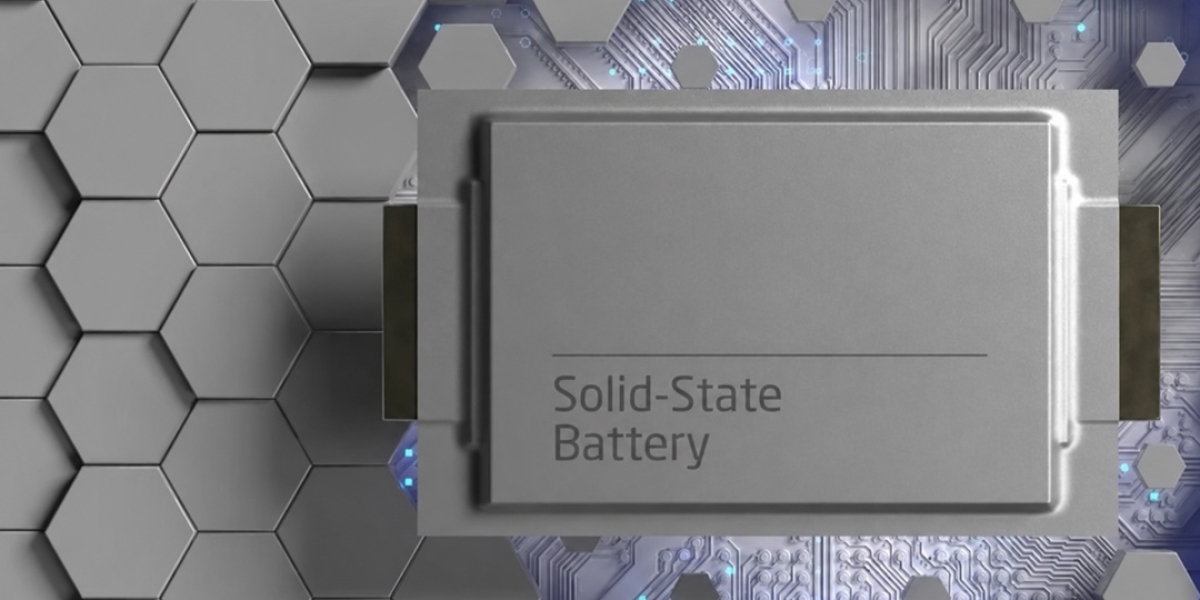
China’s auto industry has long treated solid-state batteries as a distant promise, but that view is starting to shift. New independently verified test results suggest a key engineering threshold in sulfide-based solid-state battery development may have been crossed, with implications extending well beyond lab-scale performance.
According to testing conducted by the China Automotive Technology & Research Center (CATARC) in April, BYD’s solid-state battery system passed a full suite of automotive-grade safety evaluations. In a needle penetration test — one of the most demanding abuse scenarios for lithium batteries — cell temperature peaked at just 32°C. There was no smoke, no fire, and no explosion, a level of stability that would have been difficult to imagine in the era of conventional liquid electrolytes.
Energy Density, Range, and Cycle Life Push New Boundaries
Beyond safety performance, the technical specifications are equally significant. The single-cell energy density reportedly reaches 400Wh/kg, more than double that of BYD’s current mass-produced Blade battery platform. A prototype vehicle using this system achieved a CLTC range of 1,218 kilometres, while cycle life exceeded 10,000 charge-discharge cycles — a figure that, in practical terms, implies minimal capacity degradation over the lifetime of a typical passenger vehicle.
Such figures, if sustained in mass production, would mark a structural shift in the economics of electric mobility, narrowing one of the final performance gaps between EVs and internal combustion platforms.
From Pilot Lines to Early Commercialisation
Industrialisation timelines remain cautious but increasingly concrete. BYD’s Shenzhen Pingshan pilot line began operations in February, with an annual capacity of 2GWh dedicated to engineering validation and vehicle integration testing. A larger 20GWh production facility in Chongqing Bishan is scheduled to begin construction in the third quarter, targeting initial small-batch vehicle deployment in Q1 2027.
Early applications are expected to be limited to high-end models, including the Yangwang U9 and premium versions of the Han EV. Monthly output in the initial phase is expected to remain around 8,000 units, leaving mass-market adoption beyond the 300,000 yuan segment for a later stage.
Ahead of Global Rivals, But Far From Mass Market Reality
On a global timeline, BYD’s progress places it ahead of several established competitors. Toyota has already pushed back its own solid-state commercialisation target from 2027 to beyond 2030. Contemporary Amperex Technology (CATL) has also cautioned against excessive expectations, with chairman Zeng Yuqun recently describing parts of the solid-state narrative as “overheated”, arguing that some laboratory metrics are being prematurely positioned as commercial claims.
The difference in BYD’s case, however, is the presence of third-party validation from CATARC and the operation of a functioning pilot line, shifting the discussion from theoretical performance to early-stage industrial execution.
Cost, Materials and the Long Road to Scale
Despite the technical momentum, structural constraints remain substantial. Current estimates place manufacturing costs for all-solid-state batteries at more than four times those of conventional liquid lithium-ion systems. BYD’s internal roadmap targets cost parity only by around 2030.
Material sensitivity is another barrier. Solid electrolytes require strictly controlled inert atmospheres throughout production due to extreme sensitivity to air and moisture. Solid-solid interface stability remains vulnerable under long-term mechanical vibration, and upstream supply chains for key materials are still underdeveloped.

Industry expectations suggest that while the first commercially available vehicles using solid-state technology could arrive as early as 2027, broad-based adoption is likely to take an additional four to five years, depending on manufacturing yield, cost compression, and supply chain maturity.
Outlook: From Breakthrough to Industrial Standard
The latest data points do not signal a near-term disruption of the battery market. Instead, they mark the beginning of a transition phase — where solid-state technology moves from experimental validation to constrained early deployment.
If execution matches current projections, the next decade will determine whether solid-state batteries remain a premium niche or evolve into a foundational technology for the global EV industry.