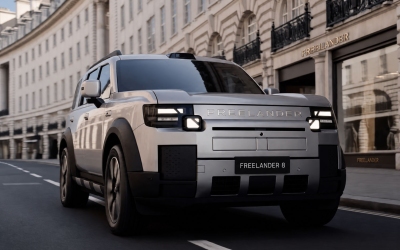
Freelander has released official images of the launch-edition Freelander 8, setting the stage for what Chery and Jaguar Land Rover have framed as a “reverse joint venture.” The timing is revealing. Months before the SUV is due to reach the market, the brand is already leaning heavily on supplier names such as Huawei, CATL and Qualcomm as proof of its credentials.
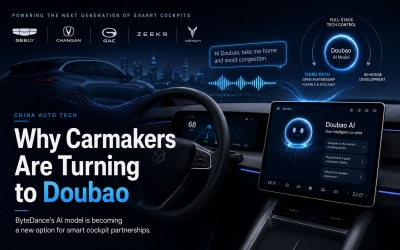
By 2026, more than 7 million vehicles worldwide are expected to be equipped with ByteDance’s Doubao large language model, marking a rapid expansion of AI integration across the automotive sector. The development is reshaping how automakers and technology firms divide responsibilities inside the vehicle stack, raising a broader question: is a new industrial structure beginning to take shape?
For years, Chinese automakers were treated as outsiders to the North American car market. Their brands were unfamiliar, their dealer networks were absent, and Washington’s tariff wall made a direct push into the United States commercially difficult. Yet travel south of the U.S. border and a different story appears on the showroom floor.
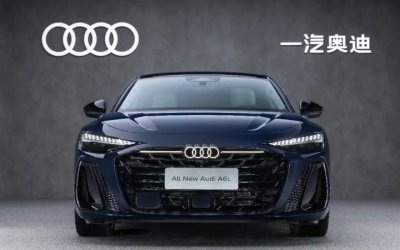
China’s luxury-car market is no longer the predictable preserve of German prestige brands. Consumer tastes are shifting, domestic electric-vehicle makers are moving upmarket and the old assumptions about badge power are being tested. For FAW-Audi, the launch of the new Audi A6L is less a routine model change than a signal that the company has begun to rethink how it competes in China.
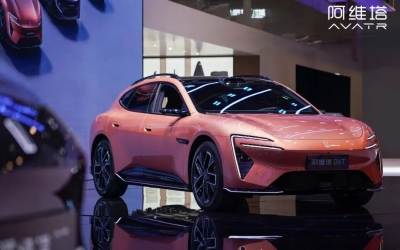
Avatr’s Hong Kong listing plan was supposed to be one of the cleaner stories in China’s crowded electric-vehicle market: a state-backed premium EV brand, supported by Changan Automobile, Huawei and CATL, seeking capital to accelerate growth. Instead, the company’s prospectus has lapsed, sales have slowed sharply, and investors are being asked to decide whether a valuation of about $3.8 billion still makes sense.
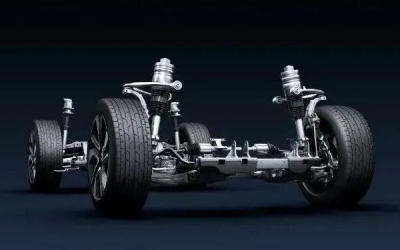
BYD has shown a vehicle driving on three wheels. Nio has made a car appear to dance. Behind these attention-grabbing demonstrations lies a deeper shift in automotive engineering: the rapid rise of the intelligent chassis, a technology built around digital control rather than purely mechanical tuning.